
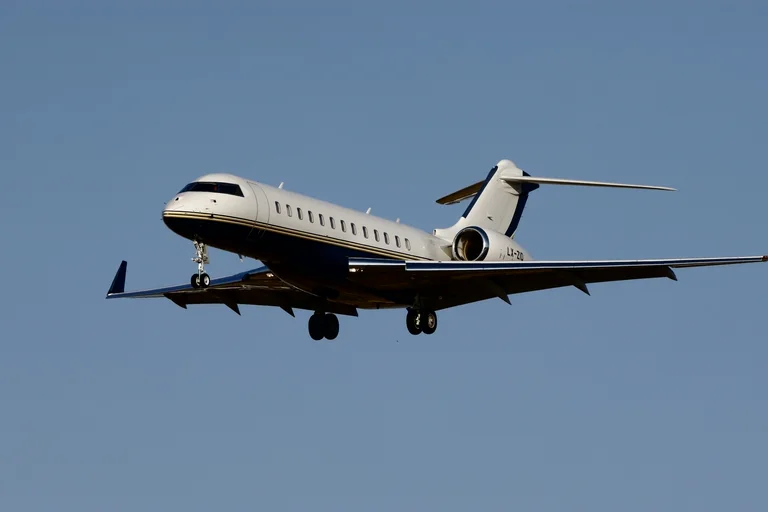





A London breakfast, a New York board meeting and a return to Europe before the week loses momentum is not a scheduling fantasy. With the right aircraft, crew and airport permissions in place, it is an operational brief. An ultra long range jet charter is built for exactly this kind of travel: long sectors, multiple time zones, meaningful privacy and fewer compromises between where you need to be and where an airline happens to fly.
The aircraft matters, but it is only one part of the decision. The real value is in matching range, cabin layout, payload, airport access and ground arrangements to the people travelling. A direct flight that requires an unscheduled fuel stop is not direct. A spacious cabin is less useful if it cannot support sleep, work and a travelling security detail. The details determine whether the journey protects your time or consumes it.
What ultra long range charter actually delivers
Ultra-long-range aircraft sit at the top end of private aviation. They are designed to cover intercontinental routes without the operational limitations of smaller business jets, often flying 6,500 nautical miles or more under favourable conditions. For principals travelling regularly between Europe, North America, the Middle East and Asia, that can remove a connection, a commercial terminal and several hours of avoidable friction.
Typical missions include London to Los Angeles, Dubai to New York, Paris to Tokyo, or a multi-stop itinerary across the Gulf, Europe and the United States. Route viability always depends on wind, passenger numbers, luggage, weather, runway performance and the required alternates. Published range is a planning reference, not a promise that every aircraft will fly every city pair non-stop on every day of the year.
The cabin changes the experience as much as the range. Most ultra-long-range jets offer separate zones for working, dining and resting, with seating commonly configured for 12 to 16 passengers. On leading models, a private rear suite, lie-flat beds, a dedicated crew rest area and a full galley make an overnight sector materially more practical. For a principal travelling with family, colleagues, advisers or security, that separation is not decorative. It creates room to conduct business and switch off when required.
Choosing an ultra long range jet charter aircraft
There is no universally right aircraft. The best option is the one that fits the mission rather than the most recognisable name on the ramp.
Gulfstream G700 and G650ER
The Gulfstream G700 offers a published range of up to 7,750 nautical miles, while the G650ER remains one of the most established ultra-long-range charter options, with a published range of approximately 7,500 nautical miles. Both are strong choices for long transatlantic and Middle East to North America sectors, with high cruise speeds and cabins designed for productive long-haul travel.
The G700 provides a larger, more flexible cabin and can be particularly well suited to groups needing distinct work, dining and rest zones. The [G650ER may be the more immediately available choice on certain dates because of its larger global charter presence. Availability, exact interior specification and operator standards matter more than a brochure comparison.
Bombardier Global 7500 and Global 8000
The Global 7500 is widely respected for its long range, smooth ride and four-zone cabin. Its published range is approximately 7,700 nautical miles, giving it serious flexibility for demanding city pairs. It is particularly compelling when the brief includes multiple passengers, an overnight sector and a requirement for different areas of the cabin to remain in use at the same time.
The newer Global 8000 extends the headline range further, although charter availability is naturally more limited while the fleet enters service. For clients who place a premium on cabin comfort over sectors of 12 hours or more, the Global platform is often a leading consideration.
Dassault Falcon 8X and Falcon 10X
The Falcon 8X has a published range of around 6,450 nautical miles and is known for its ability to access challenging airports that may be less practical for larger aircraft. That flexibility can be valuable when the destination is not a primary international hub. It may allow a closer arrival point, reducing time on the ground after landing.
The Falcon 10X is positioned at the very top of the category, with a projected range of around 7,500 nautical miles and an exceptionally large cabin. For now, any discussion of the 10X should be based on delivery timelines and real charter availability rather than assumptions. The right adviser will tell you what is actually available for your dates.
VIP airliners for larger delegations
When a travelling party moves beyond the practical capacity of a business jet, a VIP-configured Boeing Business Jet or Airbus Corporate Jet can be the better answer. These aircraft provide substantial cabin volume, boardroom-style layouts, private suites and room for larger support teams. They also require more planning, have different airport considerations and usually carry a very different budget.
For a delegation, entourage or family office move, the choice is not simply between a larger and smaller cabin. It is about passenger count, baggage, catering, security, crew duty limitations and the destination airport's ability to handle the aircraft discreetly.
The route is more important than the headline range
A direct routing is often the objective, but it should never be treated as an absolute. Westbound winds can materially affect an Atlantic crossing. High temperatures, short runways and full cabins increase performance demands. A winter departure from London with 14 passengers, substantial luggage and a need for strong fuel reserves is a different operation from a lightly loaded eastbound flight in summer.
Fuel stops are not always a failure. Sometimes one brief, efficient stop produces a better overall result than reducing payload, changing to an inferior aircraft or accepting impractical departure times. The question is whether the stop has been planned intelligently, at an airport with fast handling, reliable fuel provision and minimal disruption to passengers.
Airport selection also deserves attention. A private terminal at a well-positioned secondary airport can save more time than a marginal gain in cruise speed. Teterboro instead of a major New York airport, Farnborough rather than a central London commercial hub, or an airport closer to the final estate, resort or factory can change the day entirely. Slot restrictions, operating hours, customs arrangements and local handling all need checking before an itinerary is presented as confirmed.
What drives ultra long range jet charter pricing
Ultra-long-range charter pricing is calculated around the specific mission, not a generic hourly figure. As a broad indication, a long-haul aircraft may command five-figure hourly rates, but quoting only an hourly rate leaves out the operational picture.
The total reflects flight time, aircraft positioning, crew costs, airport and handling charges, catering, de-icing where relevant, permits, peak-date pressure and the aircraft's onward schedule. A one-way sector can cost disproportionately more than a return if the operator must reposition the aircraft or cannot use it for a subsequent flight. Conversely, a flexible travel window or a return journey that aligns with the aircraft's existing programme can create better value.
Clients should also distinguish between the lowest quote and the strongest solution. A cheaper aircraft may have an older cabin, a less suitable layout, limited Wi-Fi, an inconvenient positioning requirement or a crew schedule that creates unwanted restrictions. On a 10-hour sector, these differences become obvious.
How a well-run charter is arranged
A concise brief produces better options quickly. The essential information is departure and arrival airports, preferred timings, passenger count, luggage profile, any pets, the need for beds or a private cabin, catering preferences and whether the itinerary may change. If security, ground transfers, visas or connections to yachts, villas or commercial flights are involved, they should be included from the start.
A capable charter partner should then present real aircraft options with transparent operational context: the operator, aircraft year where relevant, cabin configuration, likely routing, quoted inclusions and any points that may affect the plan. There should be no need to repeat requirements to a succession of desks.
The 0.1% Group works independently across the global charter market, rather than steering clients towards a captive fleet. One contact can coordinate the aircraft, chauffeur movements, accommodation, security requirements and payment arrangements, including major cryptocurrencies and stablecoins where appropriate. The objective is not to make a complex journey sound glamorous. It is to make it happen cleanly, discreetly and on the timeline required.
For the traveller who crosses continents because decisions cannot wait, the best aircraft is the one that turns a demanding itinerary into protected time. Set the brief early, be clear about what cannot move, and let every operational choice serve the destination.