



A private jet charter should not begin with a generic aircraft list or an estimate detached from the mission. It should begin with the question that matters: where do you need to be, when, with whom, and what must happen around the flight for the trip to work properly?
For a principal travelling from London to Riyadh for a same-day meeting, the requirement may be speed, privacy and a return slot that remains flexible. For a family leaving Nice with luggage, staff and a dog, cabin space and baggage access may matter more than headline range. For an executive team flying a multi-stop European itinerary, the value lies in keeping the aircraft, crew and ground movements aligned while plans change.
That is the difference between booking a flight and arranging aviation properly. The aircraft is only one part of the brief.
What private jet charter actually gives you
The obvious advantage is control of time. Private terminals reduce the usual airport process to a focused arrival, security screening and boarding sequence. You can select departure times around the meeting rather than build the meeting around a published schedule. You can also use thousands of airports unavailable to most commercial services, bringing the final destination materially closer.
Privacy is equally practical. A private cabin creates space to work, hold a confidential conversation, rest, or travel with family without exposure to a crowded terminal and fixed cabin environment. For public figures and high-profile principals, discreet handling on the ground is not an indulgence. It is part of the security plan.
Flexibility has limits, and a serious charter adviser will state them. Airport curfews, slot restrictions, crew duty hours, weather and aircraft positioning all affect what can be achieved. The point is not to promise the impossible. It is to identify the right options quickly, explain the trade-offs clearly and protect the itinerary before a small issue becomes a missed commitment.
Choosing the right aircraft for a private jet charter
The best aircraft is determined by the route, passenger mix, luggage profile and how the cabin will be used. Bigger is not always better. A larger cabin may be unnecessary on a short route, while choosing too small an aircraft can turn an efficient journey into a compromised one.
Light jets for short, time-critical sectors
Light jets suit short European trips, typically carrying four to seven passengers in a compact cabin. Aircraft such as the Citation CJ series, Phenom 300 and Learjet 45 are often effective for routes including London to Geneva, Paris, Ibiza or Nice, subject to passenger and baggage requirements.
They offer a sensible balance for a quick executive movement, but there are considerations. Cabin height is lower than on larger aircraft, baggage capacity can be restricted, and smaller airports may impose performance constraints in poor weather or on shorter runways. They are ideal when the mission is simple and the savings are meaningful.
Midsize and super-midsize aircraft for Europe and beyond
For longer intra-European flights, Middle East sectors and transcontinental routes with a smaller party, a midsize or super-midsize aircraft often provides the best working environment. The Citation Latitude, Challenger 350 and Gulfstream G280 offer more cabin volume, greater baggage capacity and better range than a light jet.
This category is particularly effective for six to nine passengers who need to arrive prepared rather than merely transported. A properly configured cabin gives room for a working discussion, dining, rest and staff without making the aircraft operationally excessive for the route.
Heavy and ultra-long-range jets for serious global travel
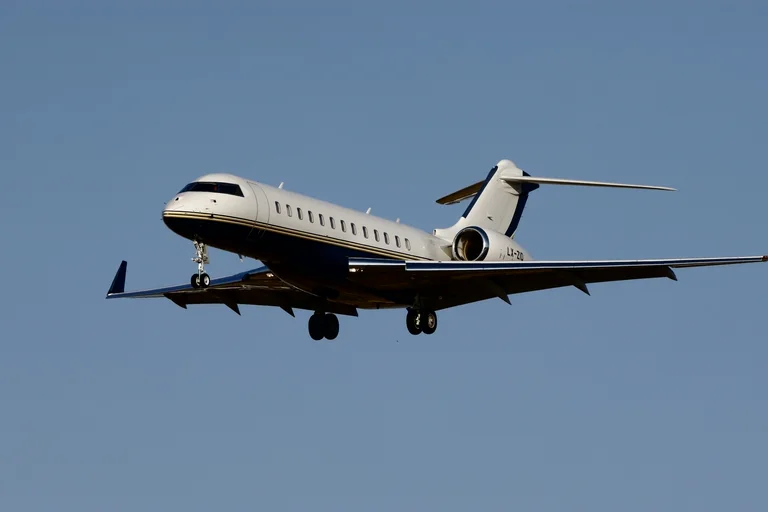
For London to New York, Dubai, Los Angeles, Singapore or other long-haul sectors, heavy and ultra-long-range aircraft are usually the appropriate choice. A Bombardier Global 6000 or 7500, Gulfstream G650 or G700, and Dassault Falcon 8X can provide long-range capability, multiple cabin zones and sleeping arrangements for extended flights.
Range figures should be treated as planning tools, not guarantees. Winds, payload, routing, runway conditions and required fuel reserves affect nonstop capability. An adviser should assess the actual request, including luggage, catering, crew and contingency needs, rather than quoting an optimistic brochure number.
For delegations, security teams or larger family groups, VIP airliners may be preferable. These aircraft can provide separate spaces for principals, staff and guests, with the range and cabin volume required for high-complexity travel. They also require more careful airport, handling and ground-transport coordination.
What determines the cost of a private jet charter?
There is no responsible fixed price for private aviation without a route and date. Charter cost is shaped by aircraft category, sector length, airport fees, crew positioning, overnight requirements, de-icing, handling, short-notice availability and whether the aircraft must fly empty to collect you or return after drop-off.
A one-way flight can therefore cost more than expected when positioning is substantial. A return with the aircraft waiting may look expensive at first, but can be more commercially sensible than releasing it and sourcing another aircraft for the return. It depends on the dates, airport pair, expected waiting time and demand in that region.
Empty-leg opportunities can offer value where an aircraft is already repositioning on a compatible route. They are not a substitute for a mission-critical charter. The timing and airports are fixed by the aircraft's existing obligation, so flexibility sits with the passenger rather than the operator.
The right approach is transparency. A clear proposal should identify the aircraft, operator, estimated flight time, seating configuration, included items and material variables. If a quote is unusually low, ask what is excluded and whether the aircraft can actually perform the mission as presented.
The details that protect the journey
The flight is the visible part of the arrangement. The details around it determine whether it feels controlled.
Passenger manifests, passport validity, visas, customs rules, pet documentation and firearms declarations must be handled accurately. A short-notice flight to a familiar destination can still fail if a passenger's entry permission is incomplete or if a pet's paperwork does not meet the arrival country's requirements.
Ground handling also matters. Chauffeurs should be timed to the correct private terminal, not the commercial airport entrance. Security requirements need to be discreetly briefed. Catering should reflect the actual party and schedule, whether that means a working breakfast before an early departure, specific dietary provision, or no service at all for a 40-minute sector.
For multi-leg travel, the brief becomes more involved. Crew rest and duty limitations, aircraft parking, permits, local handlers, hotel arrangements and onward transport must work as one plan. This is where a single accountable contact is more valuable than several disconnected bookings.
Independent sourcing changes the conversation
A fleet owner can offer certainty around its own aircraft. An independent charter specialist offers a wider decision set. Neither model is automatically superior, but the distinction matters.
Independent sourcing allows the aircraft to be selected for the mission rather than sold because it is already on the books. It also creates room to compare cabin condition, crew experience, operator standards, positioning and commercial terms across the market. The task is not to produce the most options. It is to narrow the market to the aircraft that genuinely fit the brief.
The 0.1% Group operates in that manner: one contact, aircraft sourced to the request, and practical coordination around the flight. For clients settling in Bitcoin, USDT or other major cryptocurrencies and stablecoins, payment can also be arranged without forcing a separate process for the aviation element.
How to make a charter request move quickly
A useful first message does not need to be long. The departure and arrival airports, preferred timings, number of passengers, luggage volume and whether the journey is one-way, return or multi-leg will establish the operational picture. Mention pets, infants, mobility needs, security personnel, unusual baggage or catering requirements from the outset.
If timing is still uncertain, say so. A range of acceptable departure times can produce better aircraft availability and more favourable commercial options than a rigid slot. If a meeting may overrun, make that clear before departure. The team can then consider waiting time, backup options and airport operating constraints rather than improvising late in the day.
For recurring travel, consistency is useful. Keeping preferred aircraft types, cabin expectations, passenger details, dietary requirements and chauffeur preferences on file removes repetition without making the service impersonal. The itinerary may be complex; the request should not have to be.
The most effective private jet charter is quiet in the best sense. You arrive at the right terminal, board without ceremony, work or rest as needed, and step into the next part of the day with nothing left to chase. That standard is built before the wheels leave the ground.