
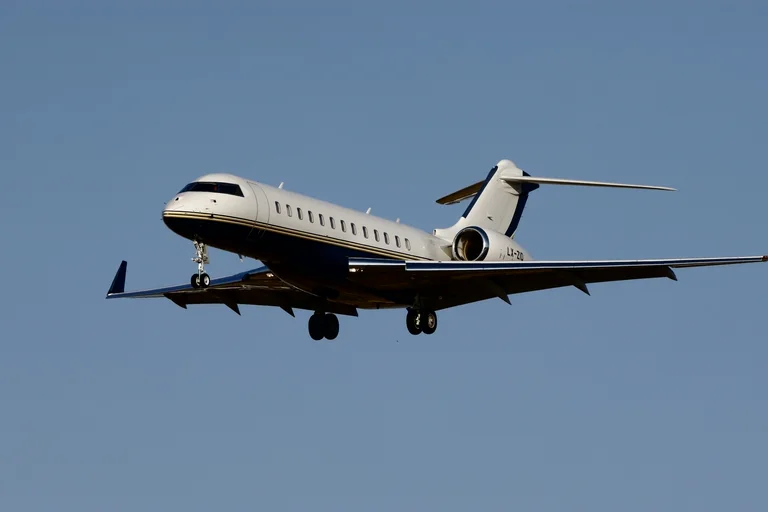




A London departure at 16:00 can mean dinner in Geneva, a morning meeting in New York or an overnight arrival in Dubai. The difference is not simply the size of the aircraft. A considered private jet range comparison matches the aircraft to the actual mission: passengers, baggage, runway, prevailing winds, desired cabin time and whether one technical stop is acceptable.
Published range figures are useful, but they are not a promise that every route will operate non-stop. The right aircraft is the one that performs properly on the day, with the required reserves and without placing unnecessary constraints on the itinerary.
What private jet range figures really mean
Range is generally stated in nautical miles (nm), usually under favourable planning assumptions. It can be affected by passenger load, baggage volume, routing restrictions, cruise speed, aircraft age and weather. A westbound Atlantic crossing often needs more fuel than the reverse route; a full cabin with winter luggage changes the calculation again.
Airport conditions matter too. A short or hot runway may limit take-off weight, reducing the fuel that can be carried. Smaller regional airports are highly valuable for proximity and discretion, but they do not always suit a fully fuelled long-range aircraft. Conversely, an ultra-long-range jet may be excessive for a two-hour European sector where a light jet gives faster airport access and lower operating cost.
For charter planning, the meaningful question is not, "What is this jet's maximum range?" It is, "Can this specific aircraft fly this route on this date, with this passenger list and baggage requirement, at a sensible operating margin?"
Private jet range comparison by aircraft class
The figures below are practical planning ranges rather than dispatch guarantees. Aircraft variants differ, as do cabin layouts and operator policies.
| Aircraft class | Typical range | Typical mission | Common examples |
|---|---|---|---|
| Very light jet | 1,000-1,300 nm | UK, France, Benelux, short European sectors | Citation Mustang, Vision Jet |
| Light jet | 1,400-2,000 nm | London to Ibiza, Nice, Geneva or Marrakech | Phenom 300, Citation CJ3+ |
| Midsize jet | 2,000-2,800 nm | Europe, Middle East and select transatlantic sectors with planning limits | Citation XLS+, Hawker 800XP |
| Super-midsize jet | 3,200-4,000 nm | London to Dubai, New York to Los Angeles, deeper European and US missions | Challenger 350, Praetor 600 |
| Large-cabin jet | 4,000-5,000 nm | London to New York, Middle East to Europe, multi-zone cabins | Challenger 650, Falcon 2000LXS |
| Ultra-long-range jet | 6,000-7,700+ nm | Non-stop intercontinental travel with full-service cabins | Global 7500, Gulfstream G700, Falcon 10X |
This comparison should be read alongside cabin requirements. A super-midsize jet may cover an impressive route, but an eight-hour sector is materially different when there is no proper bed, limited galley capability or restricted luggage hold. For a principal travelling with family, security, staff or multiple workstreams, cabin usability can outweigh the extra cost of a larger aircraft.
Which aircraft suits the routes clients request most?
London to Europe and the Mediterranean
For London to Paris, Geneva, Nice, Milan, Ibiza or Sardinia, light and midsize jets are usually the efficient answer. They access a broad selection of business aviation airports and are well suited to short notice departures, often with lower repositioning exposure than large aircraft.
The decision becomes more nuanced during ski season, when a party may bring heavy luggage and equipment, or in peak summer when full cabins and high temperatures affect performance. A larger hold or a midsize cabin can be the better operational choice even for a route easily within light-jet range.
London to Marrakech, Mykonos or the Canary Islands often sits at the point where aircraft selection needs attention. A light jet may technically complete part of that map, yet payload, weather or a preferred departure airport can change the practical answer. A super-midsize aircraft adds margin, space and the ability to keep the journey direct in more circumstances.
London to the Middle East
London to Dubai is roughly 3,000 nm by great-circle distance, but operational routing is longer. Super-midsize aircraft can be suitable depending on the model, conditions and payload. For a full passenger complement or a preference for a more spacious cabin and stronger baggage capacity, large-cabin aircraft are often the more comfortable choice.
For Riyadh, Doha, Jeddah or Abu Dhabi, the same principle applies. The route is not just a line on a map. Departure time, summer temperatures, onward connections, crew duty and ground handling all affect the best aircraft. If a client needs to arrive ready for meetings, an overnight-capable cabin is a commercial consideration, not an indulgence.
London to North America
New York is the classic test case. Certain large-cabin and super-midsize jets can cover London to New York in favourable eastbound or westbound conditions, but westbound headwinds make this a route where planning margin matters. An ultra-long-range aircraft removes much of the uncertainty and provides a more substantial cabin for the crossing.
For Miami, Los Angeles, Toronto, the Caribbean and west-coast North America, ultra-long-range aircraft are normally the direct solution from London. Aircraft such as the Global 7500 and Gulfstream G700 combine the range for these missions with separate living, dining and rest zones. That matters when the flight is both transport and a private working environment.
A fuel stop is not always a failure of planning. For some groups, a short refuelling stop allows access to a preferred aircraft or offers a meaningful saving. For others, particularly where confidentiality, rest or a tight onward schedule is central, non-stop capability is worth paying for. The correct answer depends on the brief.
Cabin, baggage and airport access change the answer
Range alone can lead to the wrong charter decision. A six-seat light jet may cover the distance, but it may not carry six adults, golf bags and large cases without restrictions. Equally, placing two passengers on a VIP airliner for a short European flight creates unnecessary cost, handling complexity and airport limitations.
Consider the entire movement. Is there a helicopter transfer at either end? Are children travelling with nannies? Does the group need separate sleeping and meeting areas? Is the destination an island airport with a short runway, or is the aircraft continuing empty to collect other passengers? Each factor affects the aircraft that should be sourced.
For multi-leg itineraries, availability is as important as headline specifications. An aircraft may be ideal for London to Dubai but unavailable in Dubai for the return date, creating an expensive repositioning requirement. Independent sourcing makes it possible to compare the whole itinerary rather than forcing every sector into the same fleet category.
How to brief a private jet range comparison properly
A useful request contains more than departure and destination. Confirm the number of passengers, approximate baggage, preferred departure window, flexibility on airports, whether a fuel stop is acceptable, and any onboard requirements. If travelling with pets, sporting equipment, close protection or high-value items, say so at the outset.
The result should be a short, honest set of options: the efficient aircraft, the more comfortable aircraft and, where relevant, the non-stop long-range choice. Each should make clear the estimated flight time, cabin configuration, baggage limitations, likely routing and total commercial position. No vague promises based on a brochure maximum.
Crypto settlement can also affect timing. Where payment is being made in Bitcoin, USDT or another major digital asset, the aircraft hold, conversion process and final confirmation should be coordinated early enough to protect the departure slot. Fast settlement is useful only when the operational team can act just as quickly.
The best private jet range comparison does not begin with the biggest aircraft available. It begins with the outcome required: arrive direct, arrive rested, land closer to the final destination, or keep the total movement commercially disciplined. Give one accountable contact the real brief, and the aircraft can be selected around your life rather than around a fixed fleet.