



A 07:30 departure from Farnborough for a two-hour meeting in Paris does not need the same aircraft as a Friday escape from London to Ibiza with six guests and golf bags. The turboprop versus light jet decision is not about choosing a lesser or greater form of private travel. It is about matching the aircraft to the route, the schedule and the people on board.
For shorter European sectors, a well-selected turboprop can be the fastest sensible answer door to door. For longer sectors, tighter diaries or clients who want a quieter, more refined cabin experience, a light jet often earns its premium. The right decision comes from the operational detail, not the badge on the fuselage.
Turboprop versus light jet: the practical difference
A turboprop uses turbine engines to turn propellers. It typically cruises lower and slower than a jet, but can operate from shorter runways and smaller regional airports. Modern examples include the Pilatus PC-12, Beechcraft King Air 350 and Daher TBM series. They are capable, pressurised aircraft designed for serious business and leisure travel, not a compromise for those who cannot access a jet.
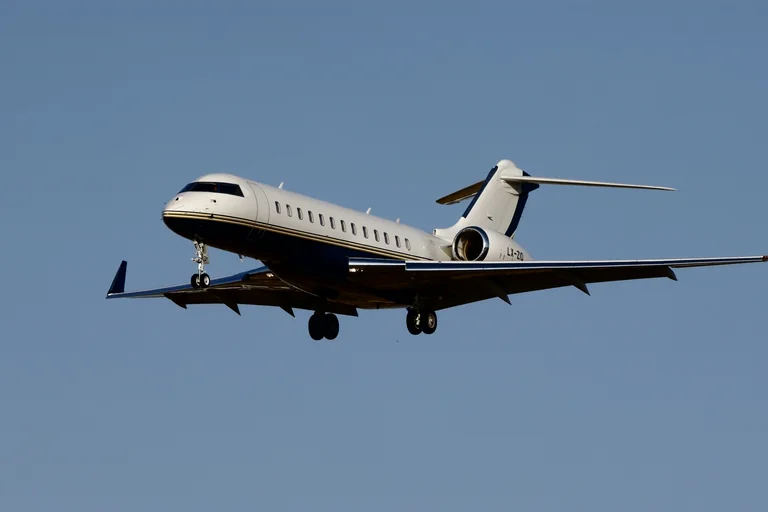
A light jet is powered by jet engines and normally flies at higher altitudes, above more weather and commercial traffic. Aircraft in this category include the Citation CJ2, CJ3 and CJ4, Phenom 300, Learjet 45 and HondaJet. Most offer an enclosed cabin, a dedicated lavatory or lavatory arrangement, and cruise speeds that make a material difference once a journey extends beyond a short regional hop.
The distinction matters most when time is measured against the complete itinerary. Flying time is only one part of the day. Airport location, runway requirements, ground transfer time, baggage and the flexibility to change plans can carry equal weight.
Speed: where a light jet starts to pull ahead
A typical turboprop cruises at roughly 260 to 330 knots. A light jet commonly cruises between 400 and 460 knots. On a 250-nautical-mile route, that difference may amount to 20 or 30 minutes in the air. If the turboprop can use an airport closer to the final destination, it may recover that time on the ground.
On a 600- to 1,000-nautical-mile sector, the picture changes. A light jet can save an hour or more, often with a more predictable flight profile. London to Nice, Geneva to Palma or Paris to Marrakech are routes where the time advantage becomes meaningful, particularly for a same-day return or a schedule built around meetings rather than leisure.
Weather is another consideration. Turboprops are highly capable in professional operation, but light jets cruising at higher flight levels can sometimes avoid lower-level weather systems and the associated turbulence. That does not mean every jet flight is smoother. Conditions, routing and the individual aircraft all matter. It does mean that a jet generally offers more altitude options when the weather is unsettled.
Airport access: the turboprop advantage
This is where a turboprop can be the more intelligent charter. Many regional airfields have runway lengths, operating restrictions or infrastructure that favour turboprop aircraft. Landing closer to a country estate, ski destination, island or factory site can remove hours of road travel and make an otherwise inconvenient itinerary workable.
For example, a King Air or PC-12 may be suited to a short runway destination that excludes many light jets, while still carrying several passengers in genuine comfort. In certain regions, particularly parts of the UK, France, Switzerland, Italy and the Caribbean, this flexibility has real value.
Runway performance is not a blanket rule. Passenger numbers, baggage weight, fuel required, temperature, wind and runway surface all affect what is permitted on a given day. A short runway may be possible in one direction, with a fuel stop or payload restriction required in the other. This is why an aircraft should be sourced against the actual brief rather than selected from a generic category page.
Cabin comfort and the experience on board
Light jets usually deliver the more familiar private-jet experience. Their cabins are quieter at cruise, their speed is more noticeable on longer sectors and the seating layout is often better suited to four to seven adults travelling for business or a weekend away. The Phenom 300 and Citation CJ4, for example, are popular because they balance efficient performance with a comfortable, well-finished cabin.
That said, cabin dimensions vary sharply. Some entry-level light jets have a lower cabin height and more limited baggage space than clients expect. A light jet is not automatically more comfortable than a larger turboprop for every group. The Pilatus PC-12 has a substantial cabin door, generous luggage capability and a practical layout that works exceptionally well for luggage-heavy travel, families and passengers with reduced mobility.
Turboprops also carry a different acoustic character. Modern cabins are well insulated, but propeller noise remains more present than in a jet, especially for passengers seated towards the rear. For a 45-minute flight, most clients will accept that trade-off readily. For three hours or more, a jet cabin is usually the preferred environment.
Baggage can decide the aircraft
A party of four travelling with soft weekend bags is straightforward. Six passengers with ski equipment, garment bags, camera cases or golf clubs can change the answer immediately. Some light jets have baggage compartments that are restricted by shape, access or in-flight availability. Others accommodate luggage well but have limited space once every seat is occupied.
A turboprop, particularly a PC-12 or King Air 350, can be remarkably useful for bulky bags and irregular loads. Conversely, a light jet may be better where speed is the priority and baggage is modest. The correct question is not simply, “How many bags?” It is, “What are the dimensions, and do you need access during the flight?”
Range, routing and fuel stops
Most turboprops are at their best on sectors of up to roughly 1,200 nautical miles, depending on aircraft type, payload and conditions. Light jets commonly offer practical ranges from around 1,300 to 2,000 nautical miles, with some aircraft extending beyond that. Neither category should be assessed solely on published maximum range, which is often based on favourable assumptions.
A full passenger load, winter winds, alternate-airport fuel and luggage can reduce the non-stop capability available in real charter planning. A route that appears simple on a specification sheet may require a fuel stop in practice. For a group travelling London to Mykonos or Geneva to Dubai, the light jet may be operationally possible only with compromises, while a midsize aircraft could make more sense.
This is also where flexibility matters. An independent charter adviser can compare viable aircraft across categories and present the actual operating logic: whether the proposed jet is non-stop, whether a turboprop creates a timing penalty, and whether an aircraft repositioning from another airport is affecting the price.
Charter cost: value is not the hourly rate
Turboprops generally have lower hourly operating costs than light jets, so they can offer better value on short sectors. But the charter quote is built from more than airborne time. Positioning flights, crew duty limits, airport fees, handling, de-icing, overnight costs and aircraft availability can materially alter the final figure.
A light jet already positioned at Farnborough may price more competitively for a Paris return than a turboprop that must arrive empty from another part of Europe. Equally, a turboprop based near the departure airport could be the clear value choice for a same-day domestic flight.
The most useful comparison is a like-for-like total: same departure window, same airports, same passenger count, same baggage and the same return requirements. Lowest headline price is not always lowest friction. An inexpensive aircraft with an inconvenient repositioning schedule, restrictive baggage limit or unsuitable cabin is rarely good value.
Which aircraft fits your trip?
Choose a turboprop when the destination benefits from a smaller airfield, the sector is short, baggage is substantial or the journey is primarily functional. It is particularly strong for UK regional flights, short European hops, sporting estates, ski transfers and multi-stop days where airport access matters more than cruising speed.
Choose a light jet when time is at a premium, the flight is longer, the cabin experience matters more, or weather and schedule resilience are central to the brief. It is often the natural choice for executive travel between major European business centres, weekend travel to Mediterranean destinations and sectors where arriving an hour earlier changes the day.
There are exceptions in both directions. A large-cabin turboprop can be the best aircraft for a discerning group. A compact light jet can be the wrong answer if the bags do not fit. At The 0.1% Group, the aircraft is sourced around the live request, not pushed from a captive fleet.
Send the departure airport, destination, preferred timings, passenger count and anything unusual in the luggage. A clear brief turns turboprop versus light jet from a general comparison into a decision that protects your time.