



A strong private jet catering guide starts with a simple fact: food is part of the flight operation, not an afterthought. A breakfast ordered for a 07:00 departure from Farnborough has different requirements from a formal dinner served at 41,000 feet en route to Dubai. The aircraft, passenger count, route, departure time and available galley equipment all affect what should be ordered - and how it should be packed.
For principals who travel frequently, the best catering feels effortless because the decisions were made properly beforehand. Fresh food arrives at the right FBO, is clearly labelled, suits the cabin and service style, and remains excellent when the crew present it. One contact should handle the brief, confirm the operational limitations and adapt when plans change.
Private Jet Catering Guide: Start With the Aircraft
Before discussing caviar, Champagne or a preferred restaurant, establish the aircraft type. Catering that works beautifully on a Global 7500 may be impractical on a light jet. The difference is not merely cabin size. It is the galley, refrigeration, oven capacity, storage space, crew complement and the likely service format.
A light jet may have limited chilled storage and little or no ability to heat plated food. On shorter sectors, that is rarely a problem. Carefully selected cold plates, pastries, fruit, high-quality sandwiches and individually packed dishes can be exactly right. Trying to force a three-course hot lunch into a compact cabin, however, creates unnecessary compromise.
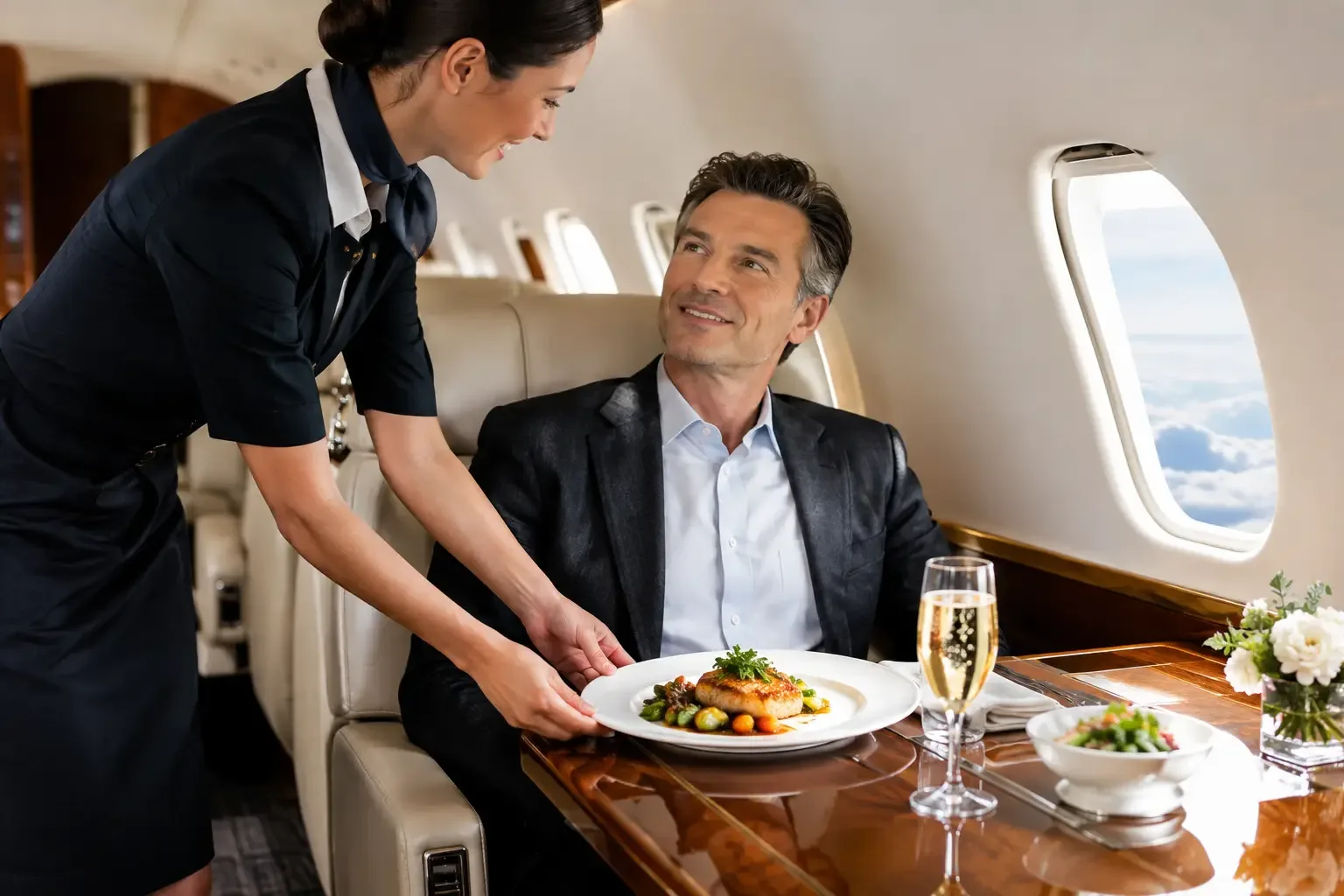
A super-midsize or heavy jet usually gives the crew more latitude. There may be proper ovens, greater refrigeration and sufficient worktop space to plate a more formal meal. Ultra-long-range aircraft and VIP airliners can support several service moments: a departure meal, grazing options, a main dinner, breakfast before arrival and a considered bar set-up. Yet even on the largest cabin, the crew need catering that can be served safely, cleanly and on time.
The point is not to limit the request. It is to match it to the aircraft. A sourcing team that charters independently can put the food brief alongside the aircraft brief from the outset, rather than attempting to make a fixed product fit the journey.
Build the Menu Around the Journey
The right menu follows the rhythm of the day. A 90-minute morning flight from London to Geneva calls for a different approach to an overnight sector from New York to the Middle East.
For early departures, keep the offering light, polished and practical. Excellent bakery items, seasonal fruit, yoghurt, smoked salmon, eggs prepared to order where the galley permits, and good coffee are often more welcome than an elaborate spread. If passengers are moving straight into meetings on arrival, avoid heavily scented dishes and anything awkward to eat in formal clothing.
Lunch and dinner should reflect both flight duration and client preference. On a two-hour European sector, one well-executed main course with a precise selection of sides is usually better than multiple courses. On longer flights, variety matters more. Passengers may want an immediate meal, then lighter food later: crudités, fruit, cheese, soup, sushi prepared by an approved supplier, or individually portioned desserts.
Late-night flying requires restraint. Rich dishes and excessive alcohol may not suit passengers who need to sleep or arrive ready to work. A lighter main, properly hydrated options, herbal teas and a breakfast set-up for the following morning can make the cabin feel considered without becoming over-serviced.
Seasonality also matters. Summer menus should travel cleanly and hold their quality despite heat on the ramp. Winter flights can support more comforting food, but sauces, soups and hot dishes need secure packaging and realistic reheating instructions. The finest ingredients are not enough if the crew cannot present them as intended.
Choose food that performs at altitude
Cabin pressure and dry air alter taste perception. Food can seem less seasoned, while delicate aromas are harder to appreciate. This does not mean making dishes aggressively salty. It means choosing food with clarity: good acidity, texture, freshness and confident seasoning.
Some foods consistently travel well. Roasted poultry, grilled fish with a stable sauce, pasta dishes designed for reheating, grain salads, composed cold plates and individual puddings are generally reliable. Others demand more caution. Crisp fried food loses its appeal quickly; rare meat is difficult to reheat consistently; and highly liquid dishes can become a handling risk in turbulence.
Presentation should also be realistic. A restaurant-style plate may arrive at the FBO looking immaculate but be unsuitable for an aircraft with limited plating space. Well-designed individual portions can offer greater control, particularly for a departure with a tight turnaround.
Dietary Requirements Are Operational Details
Dietary preferences should never be treated as a footnote. A vegan, halal, kosher, gluten-free, dairy-free or allergy-sensitive request must be briefed clearly to the caterer and crew, with separate preparation and labelling where necessary.
There is an important distinction between preference and medical need. If a passenger has a severe allergy, the aviation team needs to know early enough to verify ingredients, avoid cross-contamination and, where appropriate, adjust the wider cabin offering. It may be sensible to avoid serving a particular allergen altogether, depending on the severity of the risk and the passenger’s instructions.
Religious and cultural requirements also need precise handling. Halal meals should be sourced through an appropriate provider, while kosher catering may require sealed meals and specific presentation procedures. Do not assume that a generic menu label is sufficient. Confirm what the client expects, then record it accurately for every relevant supplier.
For families, cater beyond the principal passengers. Children may need familiar food, timed snacks and less formal choices. A cabin stocked only with adult canapés and sparkling water is not a solution on a long sector with younger travellers.
Timing, Packaging and FBO Coordination
Private aviation runs on real timelines. A perfectly designed menu is of no use if it reaches the wrong terminal, misses the crew handover or arrives too late to be loaded before slot time.
Catering should be confirmed against the latest departure schedule, departure FBO, aircraft registration and handler instructions. The team needs to know who is accepting delivery, when security screening is required, and whether the food must be delivered airside or handed to the crew landside. Last-minute aircraft swaps are common enough that the catering plan should be able to move with the operation.
Packaging is equally important. Dishes need to be labelled, temperature-controlled and secured for transport. Service instructions should be simple and specific: what is to be chilled, what needs heating, what should be served first, and what belongs to which passenger. Loose packaging, unmarked meals and complicated preparation notes add friction at precisely the moment the crew are preparing the cabin for departure.
International sectors require extra care. Certain fresh products, meats, fruit, dairy and alcohol can be restricted at destination. A caterer may be able to load a particular item at origin, but it may not be permitted to remain on board after landing. On multi-leg trips, plan the catering leg by leg rather than loading everything at the outset.
The Brief That Produces Better Catering
A concise brief avoids the usual back-and-forth. The more complete the information at the start, the more intelligently the catering can be sourced and presented.
Include these details when making the request:
- passenger count, including children and crew
- route, departure time, flight duration and onward schedule
- aircraft type or confirmed registration, if available
- dietary, allergy, religious and personal preferences
- desired service style, from discreet grazing to a hosted formal meal
- preferred drinks, brands, wines and any celebratory requirements
If a principal has known favourites, retain them as part of an ongoing travel profile. The goal is not to send the same menu every time. It is to remove repetitive questions while leaving room for the journey, destination and guest list to shape the experience.
At The 0.1% Group, catering can be coordinated as part of the charter rather than treated as a separate errand. That matters when the itinerary involves several aircraft, changing passenger numbers, a villa transfer on arrival or a request made outside standard hours. The person managing the flight should understand the full brief and be accountable for the details.
When Last-Minute Is Still Possible
Same-day catering is often achievable, particularly from major private aviation hubs, but it depends on local supplier availability, departure timing and the complexity of the request. A premium cold menu and a well-stocked bar can usually be arranged faster than bespoke hot cuisine, specialist dietary meals or rare bottles.
Where time is tight, prioritise quality and execution over theatre. Ask for food that is ready to serve, travels well and suits the passengers. A beautifully sourced selection of sandwiches, salads, fruit, pastries and preferred drinks is better than an ambitious menu that reaches the aircraft late or requires more galley capability than is available.
The best private jet catering is rarely the loudest part of the flight. It is the detail passengers do not need to think about: their preferred coffee waiting at departure, the right meal after a long day, and nothing on board that slows them down.