
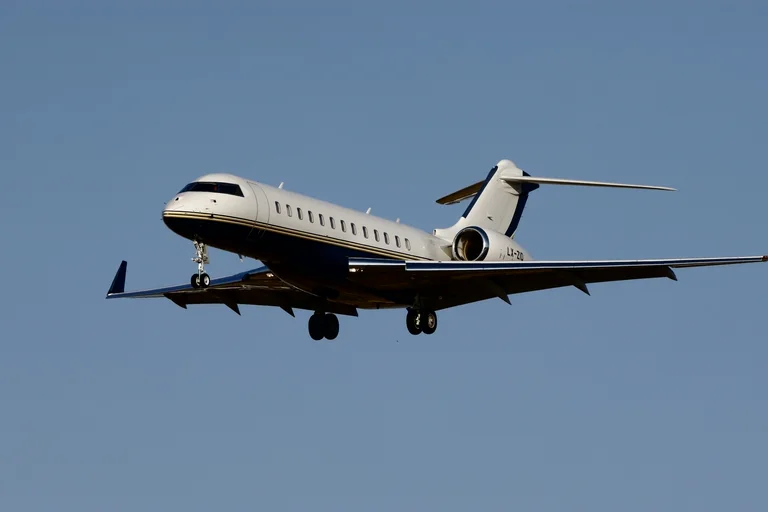




A one way private jet charter is rarely just a flight from A to B. It may be a principal leaving a board meeting in London for Riyadh, a family continuing to the Mediterranean after a ski holiday, or a touring party moving on from one city while the aircraft does not need to return. The route is simple. The operational decisions behind it are not.
The advantage is control: choose the departure time, airport, cabin and service level around the actual brief, rather than a published schedule. The trade-off is that one-way pricing can be less predictable than a return charter. Aircraft positioning, crew duty limits, airport slots and the operator's next commitment all affect what is available and what it costs.
For clients who value time and privacy, this is exactly where a capable charter adviser earns their place. One contact should establish the brief, present viable options and manage the details without turning the process into a chain of approvals.
What a one way private jet charter actually includes
A charter price is not simply an hourly aircraft rate. It reflects the aircraft's operating position, flight time, crew, handling, fuel, airport charges, permits where required and the practical cost of placing the aircraft where you need it. If an aircraft is based at Farnborough and you are departing from Paris, for example, its positioning sector may be part of the quote.
That does not make one-way travel poor value. It means the right solution depends on the route and timing. A same-day London to Geneva departure may have several suitably positioned light jets. A late-evening Nice to New York request in peak summer may call for an ultra-long-range aircraft arriving from elsewhere in Europe, with a different cost profile entirely.
A proper quote should make clear what is included, the aircraft type, passenger capacity, baggage suitability, estimated flight time and applicable tax or airport considerations. It should also identify operational variables before they become surprises. For a high-value itinerary, ambiguity is not a luxury.
Choosing the right aircraft for a one way private jet charter
The correct aircraft is determined by more than the number of passengers. Range, runway performance, cabin requirements, luggage, pets, entourage travel and onward plans matter just as much.
Short European sectors
For routes such as London to Paris, Ibiza, Geneva or Milan, a light jet can be an efficient choice for up to six or seven passengers with sensible soft luggage. Types in this category offer a private, fast alternative to scheduled aviation, but their cabins and baggage holds have limits. They are well suited to short sectors, not necessarily to a group travelling with multiple golf bags, ski equipment or extensive wardrobe cases.
A midsize or super-midsize jet creates more space and greater range flexibility. This is often the better answer for a full party, a longer European flight or a schedule that may change after departure. The cabin experience is materially different, particularly when the flight extends beyond two hours.
Intercontinental travel
For London to Dubai, the East Coast of the United States, the Caribbean or major Asian hubs, aircraft range becomes decisive. A large-cabin, ultra-long-range jet can reduce or remove fuel stops, provide proper rest space and keep a demanding travel day productive. Depending on aircraft and conditions, the decision may be between a direct sector and a technical stop that adds time, handling and uncertainty.
For delegations, security teams or extended family groups, a VIP airliner may be appropriate. These aircraft provide high passenger capacity and cabin zones that conventional business jets cannot match. They also require more careful airport planning, lead time and ground coordination.
Airports change the answer
The nearest airport is not always the best airport. A smaller private terminal can offer faster access and a calmer departure, while runway restrictions may rule out particular aircraft. Curfews, slot availability and local handling standards can also influence the recommendation.
A London departure illustrates the point. Farnborough, Biggin Hill, Luton and Stansted may each be useful depending on where you are, the aircraft, the time of day and your onward destination. The right adviser considers the road transfer, terminal experience and aircraft positioning together, rather than quoting the first available jet from a generic search.
Why one-way pricing varies
Clients often ask why two aircraft of a similar size can have noticeably different one-way quotes. The answer is operational, not cosmetic.
An aircraft already positioned close to your departure airport and needing to relocate towards your destination may be commercially attractive. Another may need to fly empty to collect you, then fly empty again after drop-off. The latter can still be the correct aircraft if it meets a specific cabin, range or security requirement, but the cost will reflect that movement.
Availability is also dynamic. Friday afternoons in peak summer, major sporting weekends, Art Basel dates, Formula 1 race weekends and school holidays all place pressure on specific routes and aircraft categories. A request made several days ahead usually creates more choice. A request made at 16:00 for a 19:00 departure can still be arranged, but the available market will be narrower.
Empty-leg opportunities are sometimes useful, but they should be treated as an opportunity rather than a travel strategy. They can offer strong value where your route and timing genuinely align. They are also subject to the primary charterer's schedule, meaning changes or cancellations remain possible. For a fixed meeting, family occasion or international connection, a dedicated one-way charter is usually the more dependable decision.
The details that should be handled before departure
The best private travel feels uncomplicated because the preparation has been thorough. Passenger names, dates of birth and passport details should be checked early, particularly for international sectors. Visa rules, advance passenger information, customs declarations, pets, firearms, valuable goods and special dietary requirements all need clear handling.
For departures and arrivals outside standard hours, ground transport needs equal attention. A car waiting at the terminal is useful. A chauffeur who knows the correct gate, aircraft stand and contingency route is better. When an itinerary includes a villa check-in, yacht transfer, security detail or a connecting helicopter, these elements should be coordinated against the actual wheels-down time rather than an optimistic timetable.
Catering deserves the same judgement. A short morning flight may call for coffee, fruit and a familiar newspaper. An evening transatlantic sector may require a full service aligned to dietary, cultural or family preferences. The point is not excess. It is ensuring the cabin is prepared for the people travelling in it.
A clearer way to request a charter
A concise brief speeds up the process. Give your preferred departure airport and time, destination, passenger count, luggage profile and any non-negotiables. Mention pets, children, reduced-mobility requirements, security personnel or a specific cabin preference from the outset. If your timing is flexible by even an hour, say so. Flexibility can expand aircraft availability considerably.
You should then receive realistic options, not vague promises. That means the actual aircraft category or specific aircraft, a transparent view of the schedule, an all-in commercial position and confirmation of what happens next. If the preferred aircraft cannot operate the route without a fuel stop, that should be stated plainly. If a nearby airport offers a stronger solution, you should know why.
At The 0.1% Group, the approach is built around one accountable contact, independent aircraft sourcing and rapid confirmation. The brief may be a single sector or the first movement in a wider itinerary involving hotels, villas, chauffeurs, security and specialist requests. It is handled in confidence, with payment options that can include major cryptocurrencies and stablecoins where appropriate.
When a return charter may be the better choice
One-way is not automatically the most efficient structure. If you need the aircraft to wait and return you within a short period, keeping the same aircraft and crew can be more practical than arranging two separate sectors. This is common for a day of meetings, a major event or travel to an airport with limited onward availability.
Conversely, if the stay is several days or weeks, releasing the aircraft after arrival and booking a separate return can make more sense. The deciding factors are aircraft availability, local airport conditions, parking charges, crew accommodation and how fixed the return date really is.
The right question is not whether one-way or return is cheaper in principle. It is which arrangement gives you the strongest combination of timing, certainty and aircraft suitability for the trip you are actually taking.
A well-run one way private jet charter should leave you with one decision to make: which option best fits your plans. Everything after that should be quietly organised before you reach the terminal.