
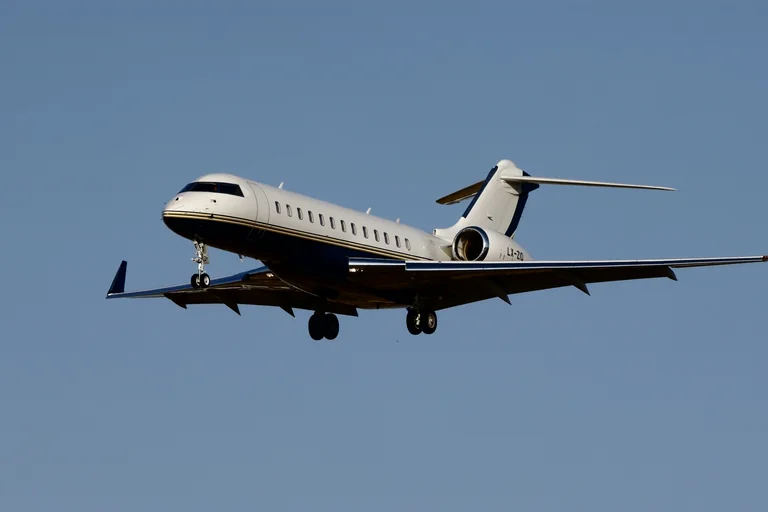


A London breakfast meeting, a Geneva lunch and a return to Farnborough before the markets close place very different demands on an aircraft than a week in Dubai with four adults, golf bags and a full wardrobe. The light jet versus midsize jet decision is not about choosing the larger cabin by default. It is about matching the aircraft to the real mission: people, baggage, runway, range, timing and how you intend to work or rest en route.
For a short, tightly timed European sector, a light jet can be the sharper tool. For a longer flight where space, luggage and arrival condition carry more weight, a midsize jet often earns its higher charter cost. The best choice is made before the aircraft is selected, not after.
Light jet versus midsize jet: the practical difference
A light jet is built for efficient, point-to-point private travel. Typical examples include the Embraer Phenom 300, Cessna Citation CJ3+ and Citation XLS. Depending on the specific aircraft, expect seating for around five to eight passengers, a practical range of roughly 1,500 to 2,000 nautical miles, and a compact cabin suited to sectors of one to three hours.
A midsize jet provides a material step up in cabin volume, baggage capability and non-stop range. Aircraft such as the Cessna Citation Latitude, Hawker 800XP and Embraer Praetor 500 commonly seat seven to nine passengers, with ranges broadly from 2,500 to more than 3,000 nautical miles. They are usually the more comfortable proposition once a flight moves beyond three hours, or when passengers need to arrive ready for a board meeting rather than simply reach the destination quickly.
Those figures are guides rather than guarantees. Wind, temperature, passenger load, baggage weight, runway performance and routing restrictions can all change what is operationally sensible. A nominal range figure does not mean an aircraft can fly that distance on every day of the year with every seat occupied.
Range is only useful when it protects the itinerary
For travel within the UK and Europe, light jets cover a large share of common requests without compromise. London to Nice, Geneva, Paris, Ibiza, Milan or Palma is comfortably within their natural operating profile. They can also perform routes such as London to Athens or London to Marrakech in suitable conditions, though payload and weather require closer attention.
The distinction becomes clearer on longer sectors. A midsize jet can often fly London to Dubai with a fuel stop depending on aircraft, conditions and load, while a light jet would require more deliberate planning and may need an additional stop. On routes such as London to the Canary Islands, Istanbul or parts of the Middle East, the larger aircraft gives the dispatcher more options and the principal more certainty.
Fuel stops are not automatically a problem. A well-managed technical stop can be quick and discreet. But they add exposure to delays, crew duty limitations, handling variables and border formalities. If the journey is time-critical, or if the passenger expects to sleep, conduct calls and arrive composed, avoiding an unnecessary stop has a value beyond the published hourly rate.
Cabin experience changes after two hours
A light jet cabin is private, efficient and perfectly credible for executive travel. It is generally designed around club seating, with limited room to move about once everyone is seated. On a sixty- to ninety-minute flight, that rarely matters. It is an excellent environment for a small team, a couple travelling with light luggage, or a principal making a same-day return.
A midsize cabin feels less constrained. There is usually greater headroom and width, more generous legroom, a proper refreshment area and better scope to work privately. Some configurations include a belted lavatory, additional divan seating or more substantial storage. These details matter when travelling with advisers, security, children or a larger collection of luggage.
Cabin height deserves particular attention. It varies significantly between aircraft marketed in similar categories. A six-foot passenger may be entirely comfortable in one light jet and need to stoop in another. Equally, an older midsize aircraft can offer impressive cabin dimensions but a less contemporary interior or connectivity standard than a newer light jet. Category alone is not the brief. The exact tail, configuration and refurbishment status matter.
Baggage is where sensible plans often change
The most common mismatch is not passenger count. It is luggage. Six people with soft weekend bags may fit a light jet well. Four people with hard cases, ski equipment, garment bags, golf clubs or substantial retail purchases may not.
Light jets frequently have external baggage holds with restricted openings. A bag can fit by volume but still be impossible to load because of its shape. Winter travel is especially revealing: bulky coats, ski boots and equipment quickly consume a hold designed for short business trips.
Midsize jets generally offer more usable baggage space and, on some aircraft, access to luggage during flight. That can be decisive on a longer journey with children, valuables, presentation materials or a wardrobe required immediately on arrival. It is worth declaring every unusual item at the outset, including instruments, sports equipment, pet carriers and unusually sized cases. There should be no assumptions made on the ramp.
Airport access can favour the smaller aircraft
A light jet is not merely a lower-cost option. Its size and performance can make it the better choice for airports with shorter runways, lower handling charges or tighter operating restrictions. Regional airfields can save meaningful time compared with major commercial hubs, particularly for homes, estates and meetings outside capital cities.
That advantage is not universal. Runway length, surface, elevation, weather and local regulations are assessed aircraft by aircraft. A midsize jet may be required where passenger and baggage load are higher, while certain airports impose limitations that affect both categories. Slot availability, opening hours, customs arrangements and overnight parking can influence the plan as much as runway length.
For a multi-leg itinerary, the right aircraft may change between sectors. A light jet could be ideal for London to Courchevel via a nearby airport, while a midsize jet is more appropriate for the onward flight to the Middle East. Keeping one aircraft throughout can be convenient, but it is not always the most efficient answer.
Charter value is not the same as hourly rate
A light jet usually carries a lower charter price, lower fuel burn and, in many cases, lower airport charges. For a four-person London to Geneva return, it can offer outstanding value because the mission plays to its strengths. Paying for a larger jet simply because it sounds more substantial is rarely a mark of good judgement.
Conversely, selecting a light jet for a longer, baggage-heavy trip can create false economy. If a fuel stop extends the day, luggage has to be split, or the cabin leaves passengers unable to work comfortably, the headline saving quickly loses relevance. A midsize jet may also reduce the need for a separate baggage solution or an additional positioning movement.
The quote should account for the whole operation: aircraft positioning, crew overnight costs where applicable, airport fees, catering requirements, de-icing risk, permit requirements and the likelihood of schedule changes. An apparently low rate without a clear operational picture is not necessarily the better offer.
How to choose without over-specifying
Start with the non-negotiables. Give the exact route, travel dates and preferred departure windows, then confirm the number of passengers, estimated luggage and whether the itinerary must be non-stop. Add anything that affects the cabin requirement: a need to take calls, travelling with children, a pet, mobility considerations, security personnel or a preference for a particular aircraft age or interior standard.
Then consider the shape of the trip. A one-way flight may favour the best available aircraft in the correct category. A return, multi-leg tour or itinerary with uncertain timings may justify holding an aircraft and crew close to the principal. For delegation travel, the ability to work around a table and separate groups within the cabin can outweigh the saving of a smaller jet.
At The 0.1% Group, aircraft are sourced against the brief rather than pushed from a captive fleet. That means the conversation can stay focused on what the itinerary genuinely requires: a highly efficient light jet for a same-day European movement, or a midsize aircraft that protects comfort, luggage capacity and operational margin on a more demanding sector.
The right aircraft should feel proportionate, not performative. If it gets you into the right airport, carries everything required and protects the day around the flight, it has done its job properly. When the itinerary becomes more complex, choosing the larger category early is often the quietest way to keep the entire journey under control.