

A delegation cannot afford to arrive in fragments. When senior executives, advisers, security personnel and technical teams are travelling for a board meeting, government engagement, investor roadshow or site visit, the aircraft is part of the operation. Private jet charter for delegations creates a controlled travel environment: one departure time, one agreed manifest, one accountable team and far less exposure to commercial airline disruption.
The requirement is rarely just to move a group from London to another city. It may involve confidential discussions before arrival, secure handling of documents or equipment, a late change to the passenger list, onward helicopters or chauffeur transfers, and a return flight that depends on the meeting ending on time. That is why delegation charter needs proper planning rather than a simple aircraft quote.
When delegation travel needs a private aircraft
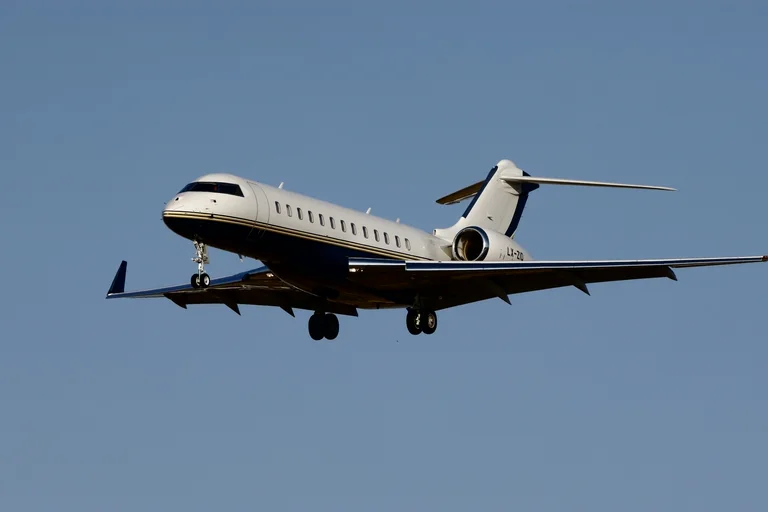
For a small executive group, a business jet can turn what would be a full day of airport transfers, connections and waiting into a direct, discreet movement. For larger parties, an airliner-configured aircraft can keep a full delegation together while providing separate areas for principals, staff and security.
The value is not limited to speed. Private terminals allow passengers to arrive closer to departure, while access to regional airports can shorten the final road journey considerably. A team heading to an industrial site, private residence, resort, manufacturing facility or conference venue may land far closer to the actual meeting than a scheduled service permits.
There are limits, and a good charter adviser will state them clearly. Slots, airport operating hours, traffic rights, runway limitations and crew duty rules still apply. A late request can often be solved, but not every airport can receive every aircraft at every hour. The right answer is the one that protects the itinerary, not simply the largest aircraft available.
Choosing the right aircraft for a delegation
Aircraft selection begins with the true passenger count, including assistants, close protection officers, interpreters, technical personnel and any travellers joining at a later stop. It also depends on the route, baggage profile, need for stand-up cabin space and whether the group must work privately in flight.
A super-midsize or large-cabin jet suits many European and transatlantic executive delegations. These aircraft typically offer a comfortable working cabin, enclosed lavatory, meaningful baggage capacity and enough range for direct sectors that would otherwise require a commercial connection. For example, a London to Riyadh or London to New York brief may call for a large-cabin or ultra-long-range aircraft depending on passenger numbers, winds, baggage and desired cabin layout.
For groups of 15 to 40 passengers, VIP airliners and executive-configured regional aircraft become more practical. They provide greater seating capacity and can be configured with distinct zones for principals, staff and security. The trade-off is that larger aircraft require longer runways, may have fewer suitable airport options and can attract higher handling and repositioning costs.
A delegation does not always need everyone on one aircraft. Two coordinated business jets can be a more efficient solution where the party has different departure points, security protocols or meeting schedules. It can also protect the programme if one group must leave before the other. The decision should follow the brief, not a fixed fleet preference.
Cabin layout matters as much as seat count
A quoted seat number does not tell the whole story. Fifteen seats may be technically available, but not all configurations are suited to a delegation that needs to review papers, hold a private discussion or rest before a demanding engagement.
Ask how the cabin is divided, whether there is a dedicated crew-rest area, the size and location of baggage compartments, and whether the aircraft has reliable onboard connectivity. For a principal travelling with advisers, an enclosed rear cabin can be more valuable than several additional seats. For a technical team carrying product samples, broadcast equipment or cases of materials, baggage volume and loading access may be decisive.
Planning a private jet charter for delegations
The strongest delegation charters are built around an itinerary, not merely a route. Departure and arrival airports, passenger identities, luggage, ground movements, security requirements and meeting timings should be considered together from the outset.
A clear briefing allows the charter team to source aircraft against the realities of the request. The following details make a material difference:
- exact passenger numbers, with provisional and confirmed manifests
- departure window, final destination and any intermediate stops
- passport nationalities, visa considerations and special assistance needs
- baggage, equipment, catering and connectivity requirements
- security protocols, chauffeur movements and named ground contacts
Names can remain handled in confidence until they are operationally required, but passenger documentation cannot be an afterthought. International private travel still involves customs, immigration and airport security processes. On certain routes, advance passenger information must be submitted within defined timelines. A last-minute name change may be possible, yet it needs to be checked against the destination, aircraft operator and handling arrangements before it is promised.
For multi-leg programmes, build sensible margin into the schedule. A two-hour meeting can become four, a principal may need to continue to another city, or local traffic can delay the final transfer. Private aviation offers flexibility, but crews have regulated duty limitations and airports may impose curfews or slot restrictions. Real timelines from real requests are more useful than an itinerary that only works on paper.
Privacy, security and discretion
Delegation travel often involves commercially sensitive negotiations, public figures or geopolitical considerations. Discretion therefore extends beyond a quiet cabin. It includes how the itinerary is shared, who can access passenger information, which terminals are used and how ground teams communicate on the day.
Security personnel should be included in the initial brief rather than added after aircraft selection. Their seating, equipment, weapons declarations where legally permitted, vehicles and terminal access can affect the plan. The same applies to close protection teams travelling separately by road or joining at an intermediate destination.
At some airports, private terminal use is straightforward. At others, VIP handling may involve a dedicated facility, escort services or a more controlled process through the main terminal. There is no universal standard. An experienced charter partner confirms the specific procedure for each airport rather than relying on assumptions.
What determines the charter cost
Delegation charter pricing reflects far more than flight time. Aircraft size and availability are central, but the final figure can also include positioning sectors, crew overnight costs, airport and handling charges, de-icing, catering, ground transport, permits and route-specific taxes.
A one-way flight can appear disproportionately expensive if the aircraft must reposition to collect the group or fly empty after drop-off. A return itinerary with sensible waiting time may offer better value, especially where the aircraft can remain in place and the crew can operate within duty limits. Conversely, leaving the aircraft on the ground for several days can be less efficient than releasing it and sourcing a separate return option.
For complex movements, compare the operational value rather than only the headline quote. An apparently lower price may require inconvenient airport changes, a tighter crew schedule, limited baggage capacity or a cabin configuration that does not work for the delegation. The right proposal explains those compromises before confirmation.
One contact, from aircraft to arrival
The aviation element should not sit apart from the rest of the programme. A delegation may need secure executive cars at both ends, hotel rooming for staff, a villa or private residence for principals, restaurant arrangements, meeting-room support and contingency plans if timings move. Fragmenting these requirements between multiple suppliers creates avoidable gaps.
The 0.1% Group arranges aircraft independently, allowing the brief to determine the operator and aircraft type rather than a captive fleet. One contact can also coordinate the surrounding details, including chauffeur movements, accommodation and payment arrangements, with major cryptocurrencies and stablecoins available where appropriate.
The best time to start is before the final attendee list is fixed. Share the likely route, passenger range and decision deadline, then let the aircraft options reflect the programme. A well-run delegation flight should feel unremarkable to those onboard: everyone arrives together, prepared and exactly where they need to be.