


For a short trip, a private helicopter usually beats a private jet when the distance is under about 200 miles or when the slow part of the journey is the road at either end: it takes off from a heliport, a lawn or a yacht and lands close to where you are going. Beyond that, or with more passengers and luggage, a private jet is faster, more comfortable and often cheaper for the whole trip.
Both give you privacy and your own timetable. They are built for different jobs, and the right choice depends on the trip rather than on which aircraft is better. This guide sets out where each one wins, what each costs and how the two are often used together.
| Compared on | Twin-engine helicopter | Light jet | Ultra-long-range jet |
|---|---|---|---|
| Example | AW109 GrandNew, H145 | Phenom 300E | Gulfstream G650 |
| Cruise speed | About 130 to 155 knots | About 460 knots | About 490 knots |
| Range | Up to about 450 nm | About 2,000 nm | About 7,000 nm |
| Passengers | Five to eight | Six or seven | Twelve to fourteen |
| Lands at | Heliports, airfields, permitted private sites | Airports with a long enough runway | Airports with a long enough runway |
| Indicative hourly rate | £2,800 to £4,500 (UK) | $3,500 to $5,500 | $12,000 to $16,000 |
Private helicopter vs private jet: the core differences
Helicopters: built for access
A helicopter takes off and lands vertically, so it needs no runway. It can use a heliport, a hotel or estate helipad, a yacht or, with the landowner’s permission and the right approvals, a private field. That makes it the tool for short distances, for routes where traffic or terrain make the drive slow, and for scenic flights.
The cabin is compact. Charter helicopters typically seat four to eight passengers, and they are at their best on flights of under two hours. From a heliport in the city you can be at a country house, a racecourse or a vineyard without going near an airport.
Jets: built for speed and range
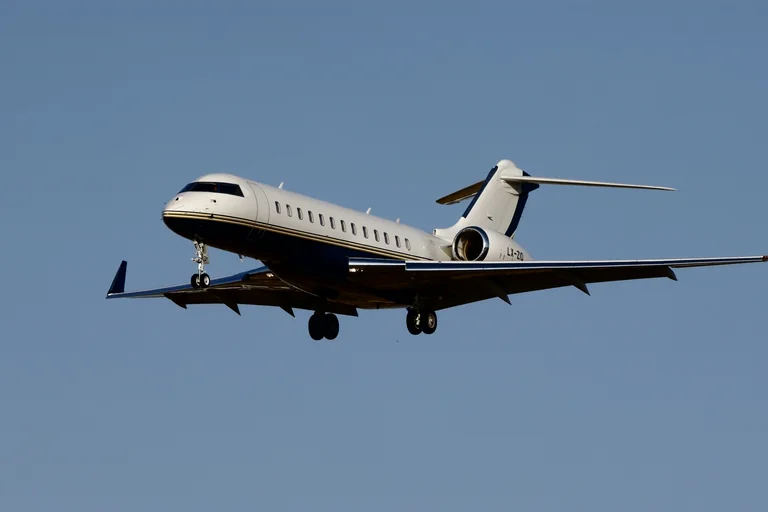
A private jet is a fixed-wing aircraft and needs a runway, but it flies about three times as fast as a helicopter. It is built for distance: a light jet covers about 2,000 nautical miles, a super-midsize like the Challenger 350 crosses a continent non-stop, and an ultra-long-range jet like the Gulfstream G650 crosses an ocean.
Jets seat from six to sixteen passengers in a quiet, pressurised cabin. Most have a lavatory, catering and, on larger types, Wi-Fi and seats that make into beds. For a family or a team travelling between countries, the jet is the obvious choice.
Helicopter or private jet for short trips: when to use each
It comes down to the trip. Manhattan to the Hamptons takes under 45 minutes by helicopter, against hours on the road on a summer Friday; a jet would only move you from one airport to another. London to Dubai is a jet trip with no alternative.
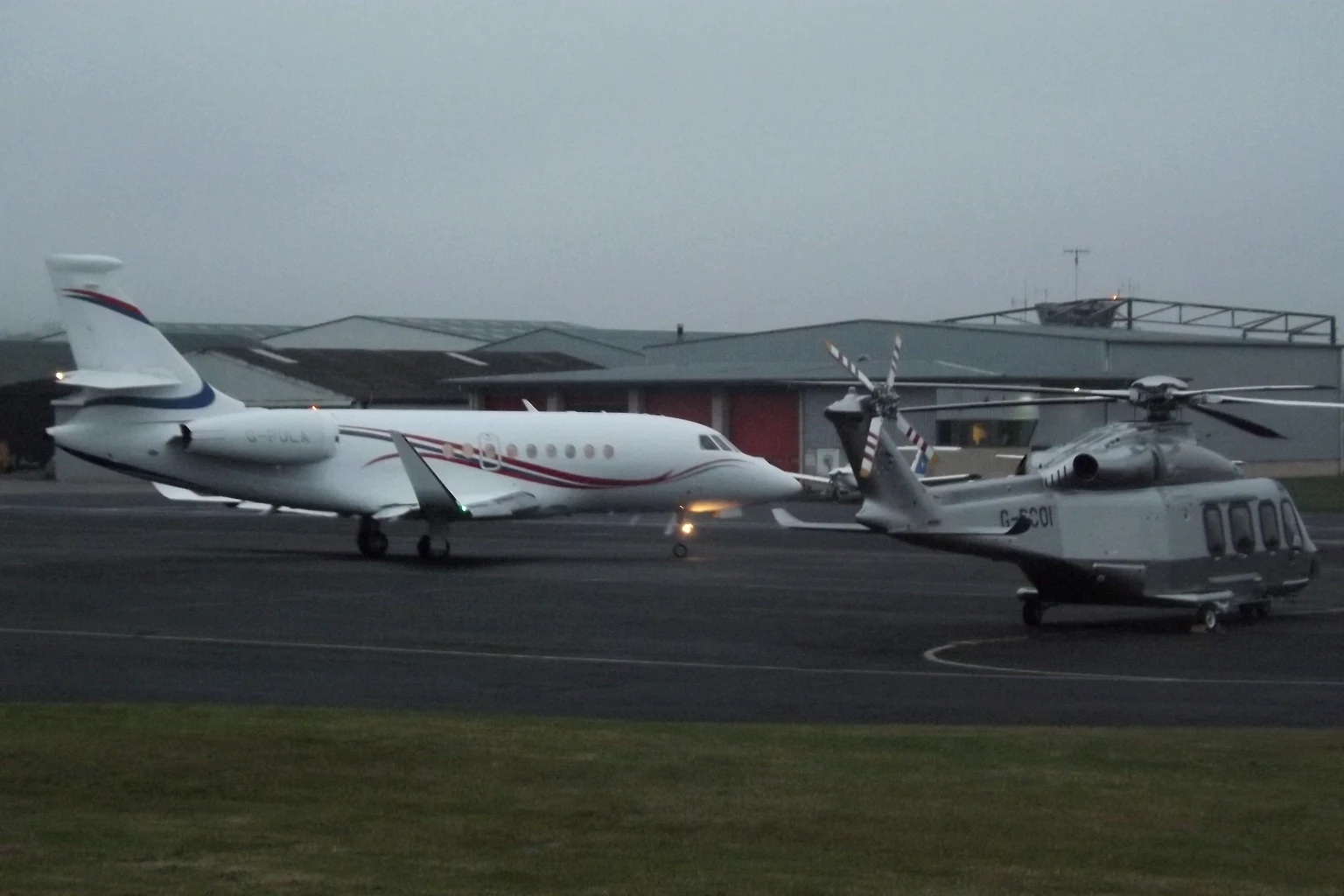
Many trips use both: a jet across the border, then a helicopter for the last leg to a remote resort, an estate or a yacht. At London’s business airports the helicopter can meet the jet beside the private terminal; our page on helicopter transfers explains how the two are timed together.
Speed, range and weather
Speed and range
This is where the jet has the advantage. Private jets cruise at about 750 to 900 km/h (400 to 490 knots). A light jet such as the Phenom 300 flies about 2,000 nautical miles, roughly 3,700 km; long-range jets about 4,000, enough for Paris to New York or Singapore to Tokyo without a stop, and ultra-long-range jets 7,000 and more.
Twin-engine charter helicopters cruise at about 240 to 290 km/h (130 to 155 knots), and their range is often under 1,000 km, even with extra tanks. They are excellent over short distances and impractical over long ones. If you need to cross a country or a continent, the jet gets you there much sooner. Our private jet range calculator shows which jets reach a destination non-stop.
Weather and reliability
Jets cruise high, above most weather, and land on instrument approaches in fog, rain and low cloud, so a jet schedule is rarely changed by the forecast.
Helicopters fly lower, and many charter flights are flown under visual flight rules. Strong wind, low cloud and thunderstorms ground them more often, and some city heliports close after dark. For a fixed schedule, or a winter trip, the jet is the more reliable choice, and a good helicopter booking includes a fall-back by car or by jet.
Helicopter vs private jet cost
The price question is about the trip, not only the hourly rate.
Hourly charter rates
Helicopters cost less per hour. Rates start around $1,500 for a single-engine helicopter and reach about $5,000 for a high-end twin. In the UK, where city heliports and flights over water require a twin, an AW109 is about £2,800 to £4,500 an hour; our page on helicopter charter in the UK has prices from London.
Jets cost more per hour: from about $3,500 to $5,500 for a light jet to $12,000 to $16,000 for an ultra-long-range jet. The private jet charter cost guide gives the bands for every cabin size.
The jet’s speed changes the arithmetic. A 500-mile (800 km) trip takes about three hours in a helicopter, probably with a fuel stop, and just over an hour in a light jet. Three hours of a twin helicopter costs more than an hour and a quarter of a light jet, so beyond about 200 miles the jet is usually the cheaper way to make the trip.
Ownership and operating costs
Buying rather than chartering scales everything up:
- A good twin-engine helicopter costs about $3 million to $10 million, with annual running costs of $200,000 or more.
- A private jet costs from about $5 million for an older midsize to well over $50 million for a new large-cabin jet, with operating costs that easily exceed $500,000 a year.
Those running costs cover maintenance, hangarage, crew salaries, fuel and insurance. A jet is a bigger machine with more systems to maintain, and in return carries more people further in more comfort. If you are buying, our guide to buying a helicopter with Bitcoin covers the purchase itself.
Comfort and the cabin
What happens on board decides how you arrive: rested and able to work, or tired.
Space and seating
Mid-size and larger jets have stand-up cabins, room to walk about and club seats that recline flat; on long flights some have a private bedroom. Helicopters have individual or bench seats for four to eight, with no room to stand. The cabin is for getting there, not for lounging or working.
Noise and ride
Helicopters are louder. Even the best-insulated cabins carry the sound of the rotors, passengers often wear headsets to talk, and there is more vibration, which makes reading or resting harder. A jet’s cabin is pressurised, temperature-controlled and quiet at 40,000 feet: you can hold a meeting, eat a proper meal or sleep.
On board
Jets can have:
- an enclosed lavatory
- a galley and catering
- satellite Wi-Fi and entertainment
- a work area or a bedroom on the larger types
Helicopters are simpler: leather seats and air conditioning, but no lavatory, no galley and no long-range connectivity. They are built for short flights.
Which one to choose
Choose a private helicopter when
- you need to land somewhere a jet cannot: an estate, a yacht, a mountain lodge, a racecourse
- the flight is under about two hours, and ideally under 200 miles
- you want to avoid the traffic in and out of a city
- the day has several short legs and no runway nearby
Choose a private jet when
- you are flying more than about 300 miles, or across a border
- you need a quiet, pressurised cabin to work or rest
- the schedule is fixed and the weather is uncertain
- you are travelling with more people, more luggage or for longer
Helicopters win on access and flexibility, jets on speed, range and comfort. For the most common combined trip in Europe, see our guide to the helicopter from London to Paris, which sets the helicopter, the jet and the Eurostar side by side.
Arranging a helicopter, a jet or both
Send us the trip: where you are leaving from, the exact address you are going to, the date, the passengers and their luggage. We come back with the aircraft that suits it, whether that is a private jet charter, a helicopter or a jet with a helicopter waiting, and a written price for each. Payment is by bank transfer in any major currency; crypto is also accepted.