
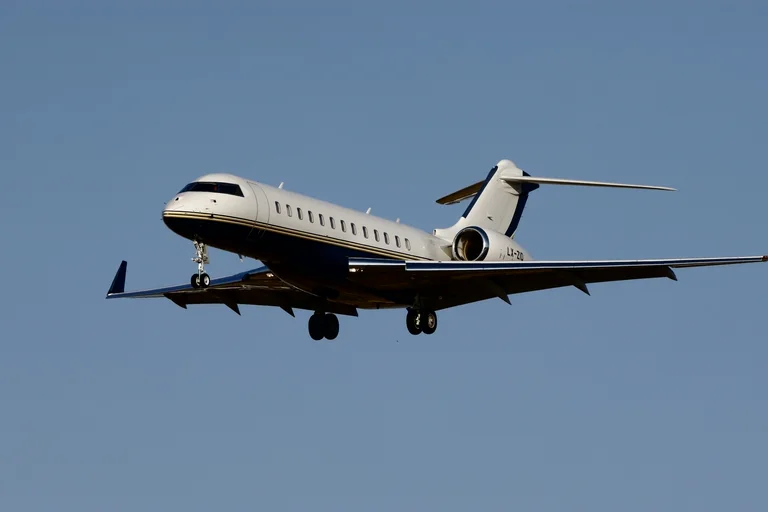




A multi-leg private jet charter is rarely just a sequence of flights. It is a moving operation: principals, family, colleagues, security, luggage, changing schedules and often several countries with different operating rules. The aircraft matters, but the quality of the planning matters more. One contact should hold the full brief, anticipate the points where a schedule can fail, and keep every sector under control.
For a four-city business itinerary, a summer programme between London, the Mediterranean and the Middle East, or a delegation moving between meetings, the right approach is to charter the itinerary as one connected operation. That means matching aircraft to each sector, protecting the schedule on the ground and retaining enough flexibility for plans that change after departure.
What a multi-leg private jet charter involves
A multi-leg itinerary may be as simple as London to Geneva, Geneva to Nice and Nice back to Farnborough. More often, it combines business and personal travel: a principal leaves London for Riyadh, joins family in Mykonos two days later, then continues to New York while staff travel on a separate routing.
The difference from booking individual one-way flights is accountability. A properly managed charter considers the whole programme before the first aircraft is confirmed. Departure windows, airport curfews, crew duty limits, aircraft positioning, ground transfers, catering, baggage volume and passenger manifests are planned together. Where suitable, the same aircraft and crew can remain with the client. Where that would add unnecessary cost or reduce operational resilience, a different aircraft can be assigned for the next sector.
Independent sourcing is useful here. A fleet operator will naturally prioritise its own aircraft. An independent charter adviser can assess the practical option for every leg, whether that is a light jet for a short European hop, a super-midsize aircraft for a transatlantic sector, or an ultra-long-range jet for a non-stop Middle East to US route.
Start with the itinerary, not the aircraft
The aircraft should follow the mission. It is tempting to select a familiar cabin first, but a multi-city programme needs a wider view. The party size may change during the trip. Golf bags, ski equipment, garment luggage or security equipment may make a compact cabin unsuitable. A late finish at one destination can affect the legal crew hours available for the following morning.
For short sectors, a light or midsize jet can be efficient when the group is small and baggage is straightforward. For longer European and regional Middle Eastern routes, a super-midsize or large-cabin jet provides more range, luggage space and room to work or rest. For overnight or intercontinental travel, an ultra-long-range aircraft may be the better decision even where a technical stop is technically possible. Eliminating a refuelling stop protects time, privacy and energy.
There are occasions when staying with one aircraft is clearly right. A family may want a familiar crew, cabin configuration and onboard preferences throughout a holiday. A senior team may need to leave documents, equipment and wardrobe on board between meetings. In other cases, changing aircraft is the smarter commercial decision. A large-cabin jet retained for two short sectors can be expensive, particularly if it must sit at a high-demand airport. The best answer depends on the itinerary, not a fixed preference.
Build time into the ground programme
Private aviation removes much of the friction associated with scheduled travel, but it does not remove local realities. Some airports require prior permission numbers, restrict late arrivals or impose seasonal slot constraints. Others have limited parking, particularly during major sporting events, international summits and peak summer weeks.
A credible plan accounts for these constraints before confirming the flight. It also separates flight time from total movement time. A 50-minute sector does not necessarily mean a 50-minute transfer between commitments. Road access to the private terminal, security arrangements, immigration procedures, vehicle positioning and the distance from the arrival terminal to a yacht berth or villa all affect the real schedule.
This is where one accountable contact earns their place. The aviation team should know that the chef is meeting the party at the villa, that a chauffeur requires a child seat in the second vehicle, or that a principal needs to take a confidential call immediately on landing. None of these details should be passed between separate providers by the client or their assistant.
Airports can be the decisive variable
The nearest airport is not always the most useful one. It may have restricted hours, limited runway capability, no parking, or a customs process that creates an avoidable delay. In the Alps, Mediterranean islands and high-demand resort destinations, the preferred airport may also be unavailable at the exact time required.
A strong charter plan presents viable alternatives early. That can mean using a nearby airport with a shorter onward drive, arranging helicopter transfers where appropriate, or timing the sector around a slot rather than forcing an unworkable departure. The objective is not simply to get an aircraft airborne. It is to keep the entire day working.
How pricing works across several sectors
Multi-leg pricing is not simply a one-way rate multiplied by the number of flights. The primary factors are flight hours, aircraft category, positioning, crew and overnight costs, handling, airport fees, fuel exposure, permits and any aircraft downtime required between sectors.
Keeping an aircraft with the client can reduce repositioning, but it can also create standby charges if the aircraft waits for several days. Releasing it and sourcing another aircraft later can be more efficient, although it introduces availability risk in busy periods. For a fixed itinerary, both structures can be priced and compared before commitment.
Transparent proposals should make the operational logic clear. If a particular aircraft carries a higher cost, there should be a reason: greater range, fewer stops, better baggage capacity, a newer cabin, stronger Wi-Fi capability, or the ability to remain parked at a constrained airport. Low headline pricing without the relevant operational detail can become costly once permits, waiting time and repositioning are added.
Payment also needs to suit the client’s operating reality. For clients who hold digital assets, settlement in major cryptocurrencies or stablecoins can be arranged for qualifying aviation bookings, subject to the required checks and timing. That is useful when speed matters, but the confirmation process still needs to be disciplined. Aircraft availability is only protected once the operator has accepted the flight and the commercial terms are secured.
Multi-leg private jet charter for changing plans
The most valuable part of a multi-leg private jet charter is often not visible on the initial itinerary. It is the ability to respond when a meeting overruns, a guest joins the trip, weather closes an airport, or a decision is made to continue to another city.
No operator can promise that every change will be cost-neutral or possible at a moment’s notice. Crew duty rules, airport curfews and peak-period capacity are real constraints. What a properly connected adviser can do is act quickly, explain the options plainly and protect the best workable outcome. That may involve extending crew, moving to an alternative airport, holding a backup aircraft, or re-routing the party while onward luggage and ground transport are repositioned.
The brief should therefore include more than dates and passenger numbers. Share likely decision points, preferred fallback airports, security requirements, dietary requests, pets, special baggage and who has authority to change the schedule. This allows decisions to be made without a chain of calls when time is limited.
The details worth confirming before departure
Before the first sector, the itinerary should have a final operational review. Passenger names must match travel documents, visa and passport requirements need checking, and any travelling minors, pets, firearms or specialised equipment need to be declared well in advance. For international sectors, customs and immigration requirements vary significantly by airport and nationality.
It is equally worth confirming the practical preferences that shape the experience: cabin temperature, catering timing, preferred newspapers, onboard connectivity, transfer vehicle types and the precise address for each arrival. A client should not need to repeat these details at every stage of a journey.
For delegation travel, designate a lead traveller or chief of staff who can approve passenger substitutions and timing changes. For family travel, clarify which adults may travel with children and which documents are required. These small decisions prevent avoidable delays at the terminal.
The 0.1% Group arranges complex itineraries with the aircraft, routing and ground programme managed through one dedicated contact. The point is simple: real timelines from real requests, handled in confidence, without passing responsibility between a broker, a terminal and a concierge.
A good multi-city trip should feel unhurried to the people travelling, even when the operation behind it is demanding. Give your charter adviser the complete picture early, including the parts that may change. That is how an itinerary remains flexible without becoming uncertain.