

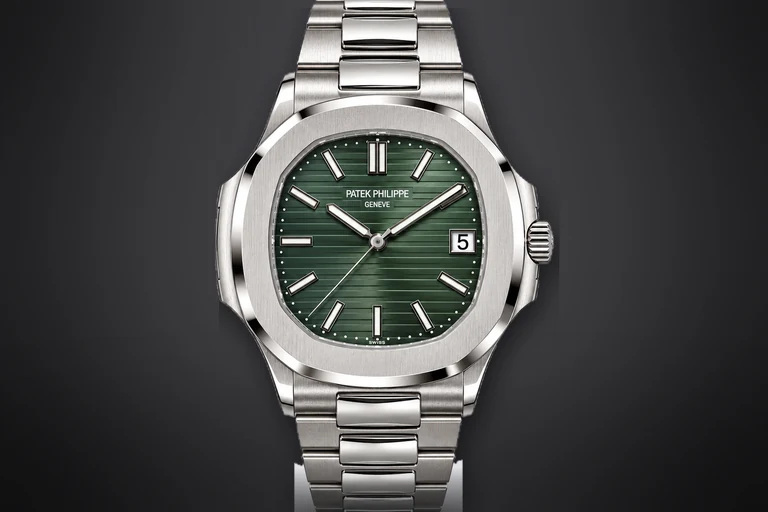




At 09:15 on a Thursday, a client sends a short message: white-dial Rolex Daytona 116500LN, full set, unworn or exceptionally clean, London delivery before Saturday evening. Payment in USDT if possible. That is a watch sourcing example in its real form: not a browsing exercise, but a time-sensitive acquisition brief where condition, provenance, price and discretion must all hold up.
The requested reference is discontinued, widely recognised and heavily traded. That makes it easier to find than a genuinely obscure vintage piece, but not automatically safer to buy. The difference between a strong example and an expensive problem often sits in details that do not appear in a dealer’s first photograph: production year, dial and bezel condition, bracelet stretch, paperwork consistency, service history, seller ownership and whether the asking price reflects the actual market that day.
For a principal, family office or collector, the point of sourcing is not simply to locate a watch. It is to put one accountable specialist between the brief and the risk.
Watch sourcing example: a 48-hour Daytona brief
The first response should not be a promise that the watch is available. It should be a precise confirmation of the brief. In this case, that means establishing whether “unworn” is essential or whether an as-new watch with minimal signs of handling is acceptable; whether the client requires the original purchase receipt as well as box and warranty card; and whether Saturday delivery is fixed because of travel or an event.
These distinctions change the search. A strict unworn, full-set example from a desirable production period may command a meaningful premium. A near-new watch with light wear may be available sooner, from a stronger seller, at a more rational number. Neither is universally better. The right choice depends on whether the watch is intended for regular wear, a gift, a collection or a longer-term hold.
Once the requirements are fixed, the sourcing network is approached discreetly. The work is not limited to public listings. Established dealers, private collectors and trade contacts may each hold suitable stock, but every route carries a different combination of price, speed and verification requirements. A watch offered immediately in London is not equivalent to one said to be available in another market pending confirmation.
Within the first hour, the client should receive real options rather than vague assurances. For each candidate, that normally means the full reference, year where known, set configuration, condition, location, availability status and delivered price. The best option is not always the lowest quote. A lower figure can conceal a watch that requires shipping across borders, has incomplete accessories, has unclear ownership history or is being offered by a party unable to release it on the stated timeline.
In this scenario, three candidates emerge. The first is unworn with its original stickers removed, held by a London dealer and available for inspection. The second is an immaculate full-set example in continental Europe at a slightly lower headline price, but needs a secure transfer and customs review. The third is a competitively priced private-market watch, yet its paperwork trail needs further work.
For delivery before Saturday evening, the first option is likely the operationally sound choice. It may not be the cheapest, but it is already in the right jurisdiction, can be inspected before funds are released and has the cleanest path to handover. That is what buying well looks like when timing matters.
What verification should happen before payment
High-value watches reward scepticism. A correct-looking serial, a box and a warranty card are not enough on their own. Verification should be proportionate to the reference, value and route to delivery.
For a modern Rolex Daytona, the process starts with a close inspection of the watch itself. The case, lugs, bezel, dial printing, hands, bracelet, clasp and movement should be consistent with the reference and its production period. The serial and warranty documentation must align, while the watch’s condition should match the seller’s description. An “unworn” piece with signs of polishing or a bracelet that has been sized and heavily handled requires a different conversation.
The set matters too. A full set is commonly understood to include the watch, box, warranty card and relevant booklets, though exact contents vary by year and market. Original purchase documentation can add comfort, but it should not be treated as a substitute for inspecting the watch. Accessories can be replaced. Condition and component consistency are harder to fake convincingly when examined properly.
Seller verification is equally important. Is the watch owned by the dealer or offered on consignment? Can the party provide a clear commercial invoice? Has the piece been checked against available stolen-watch databases and does the seller have a credible record in the trade? For more valuable or vintage references, the chain of ownership, service documentation and component originality deserve deeper scrutiny.
This is also where sourcing earns its fee. The client should not have to pursue serial photographs, interrogate a seller’s availability or decide whether an unexplained discount is a saving or a warning. Those questions are handled before an option is presented as ready to proceed.
Price is more than the quoted number
A rare watch has several prices at once: the seller’s asking price, the price at which a credible buyer can secure it, and the final cost of having it safely in the client’s hands. They are not always the same.
A proper quote should account for the watch, sourcing margin where applicable, inspection, secure logistics, insurance and any taxes or duties that genuinely apply. For a UK-based transaction involving a UK-held watch, the commercial path is usually more straightforward than bringing a piece in from overseas. For an international purchase, the client needs clarity on import position before committing, not after the watch is already in transit.
Market movement adds another variable. A Rolex Daytona may trade actively, but a sharp price change can occur around discontinued models, auction results or a sudden shortage of clean stock. For Patek Philippe, Audemars Piguet and Richard Mille, liquidity differs significantly by reference, material, dial and provenance. A rare complication may be technically available, yet only from one holder who is not under pressure to sell.
That is why a sourcing specialist should state the decision window plainly. If an option is firm for two hours, the client should know. If the seller will hold it only against a deposit, that should be made clear. No theatre, no artificial urgency - just real timelines from real requests.
Securing the watch and arranging delivery
After the client approves a specific watch and price, the transaction moves into execution. Payment may be made by bank transfer or, where appropriate and compliant, in major cryptocurrencies or stablecoins. Crypto settlement can be useful for a client who wants speed or prefers to deploy digital assets, but it does not remove the need for source-of-funds checks, clear invoicing and agreed payment terms.
The order of operations matters. Where practical, payment is tied to a verified watch and a confirmed release process. The piece is then prepared for insured handover or secure delivery. Packaging should protect the watch without advertising its contents, and the recipient details should be kept to those who genuinely need them.
For a London client, collection at an agreed private location may be preferable to delivery to a home or office. For someone travelling, the watch can be coordinated around a hotel, private terminal or another secure handover point, subject to local requirements. The brief can also include a second service - perhaps a car at the airport, a restaurant booking or a private jet departure after the handover. One contact avoids the usual chain of introductions and repeated explanations.
The 0.1% Group handles these requests as an operational brief, not an online retail order. The objective is simple: secure the right watch, on terms the client understands, without creating unnecessary exposure or delay.
The brief that produces better results
The fastest route to the right piece is a brief with enough room for judgement. Name the reference if known, the preferred condition, whether a complete set is required, the destination, deadline and payment preference. Then state what can flex. Is a different year acceptable? Would a black dial work if a white dial cannot be secured in time? Is the watch for immediate wear or long-term collecting?
Those answers allow a sourcing specialist to distinguish a genuine non-negotiable from a preference that can be traded for better condition, faster delivery or stronger provenance. A good brief does not make the process restrictive. It makes every option more useful.
When the watch is rare, the deadline is close and privacy matters, clarity at the start is often the most valuable luxury.