




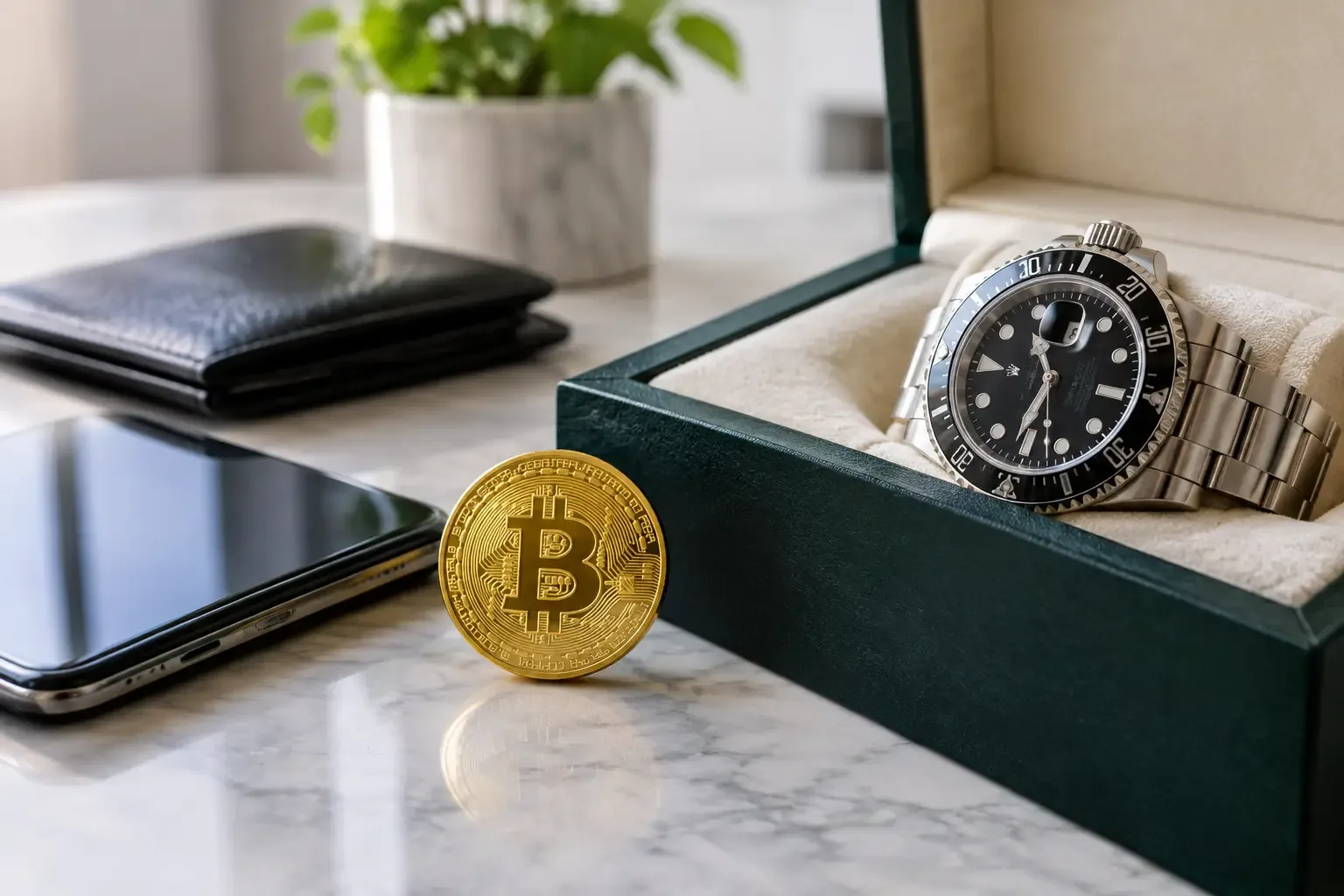
A rare watch does not become available because a payment method is convenient. It becomes available because someone can locate the right reference, verify it properly and move quickly when the seller is ready. For collectors who choose to buy luxury watches with bitcoin, the payment should support that process, not introduce uncertainty.
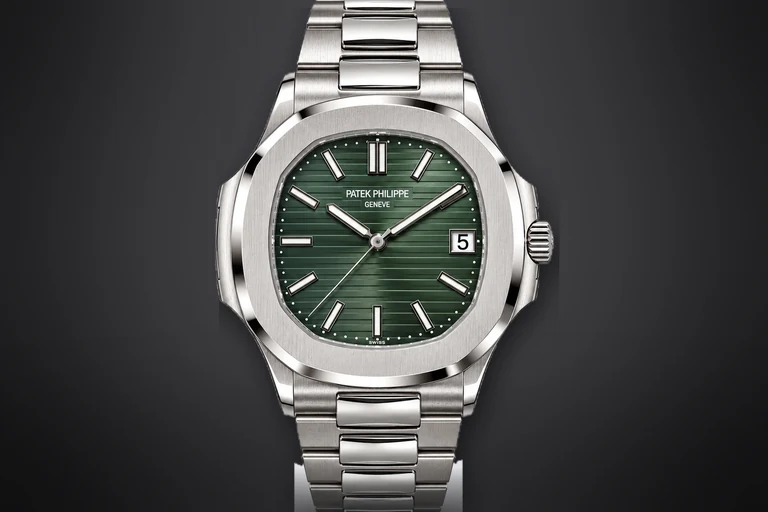
Bitcoin can be an efficient settlement option for a Rolex Daytona, Patek Philippe Nautilus, Audemars Piguet Royal Oak or Richard Mille. It is not, however, a substitute for condition checks, provenance work and a clear delivery plan. The watch still needs to be right. The price still needs to be agreed. Every party needs to know exactly when ownership and risk transfer.
For the right buyer, crypto settlement removes unnecessary banking friction and preserves discretion. The best results come from treating the transaction as a controlled acquisition, handled by one accountable contact from brief to delivery.
Buy luxury watches with bitcoin: the controlled route
The secondary watch market moves on access and confidence. A desirable, correctly priced discontinued reference may be offered privately and sold the same day. Waiting for a bank transfer to clear can mean losing the piece. Bitcoin allows a buyer with verified funds to settle without relying on banking hours, correspondent banks or multiple approvals.
That speed has a condition: the commercial terms must be settled before the transaction is broadcast. A serious provider will confirm the exact watch, its condition, included accessories, agreed price, payment currency, receiving wallet and delivery arrangements in writing. There should be no ambiguity over whether the price is fixed in pounds, euros, dollars or Bitcoin, nor when the exchange rate is calculated.
Bitcoin transactions are irreversible. That is useful when the receiving arrangements are verified, but unforgiving when they are not. Wallet addresses should be checked through an agreed verification process, never copied from an unconfirmed message or changed at the last minute. For significant acquisitions, compliance checks and source-of-funds information are normal. They protect the buyer, the seller and the transaction without turning a discreet purchase into a drawn-out retail exercise.
Start with the reference, not the payment rail
A useful brief goes beyond the model name. State the reference number where possible, preferred dial and metal, production period, condition threshold and whether an unworn example is essential. Be clear on the importance of a full set, original box and papers, service history, original bracelet length and any preference for a specific serial range.
These details change both availability and value. A vintage Submariner with a replacement service dial may be an excellent daily wearer but a poor fit for a collector seeking originality. A modern Royal Oak can look complete with box and papers while still carrying an undesirable polish, stretched bracelet or missing links. A Patek Philippe may command a premium for factory archive documentation, but documentation alone does not prove that every component remains correct.
A specialist should come back with real options, not broad assurances. That means a clear description of each available piece, current images or video, condition observations, location, seller position and a realistic timeline. If the right watch is not immediately available, the brief should remain live across a trusted global network rather than being forced into a nearby substitute.
Verify what is being bought
Before payment, the watch should be assessed for authenticity, condition and completeness. The depth of inspection depends on the reference and value. A current-production Rolex may require a different process from a vintage Patek Philippe perpetual calendar, but neither should be bought on attractive photographs alone.
The assessment should cover the case, dial, hands, movement, bracelet, clasp, serial and reference markings. It should identify replacement parts, refinishing, water damage, movement issues and signs of excessive polishing. For rare or discontinued pieces, it should also consider whether the configuration is period-correct and whether the apparent rarity is genuine.
Provenance matters because it informs both confidence and future liquidity. It can include original sales documentation, service records, a known ownership history, dealer paperwork and a credible chain of custody. Papers are valuable, but they are not a shortcut around physical examination. A watch can have papers and still be compromised by incorrect components or poor restoration.
Pricing Bitcoin watch purchases properly
The number on a listing is rarely the full cost of acquisition. A proper quote should distinguish between the watch price, any sourcing fee, authentication or inspection cost, shipping, insurance and applicable taxes or duties. This is especially relevant when the watch and buyer are in different jurisdictions.
For UK delivery, VAT treatment depends on the seller, the watch's origin and whether it is being sold under a margin scheme or imported. A collector arranging delivery to the Middle East, Europe or North America faces different tax and customs considerations. These points should be established before payment, not raised after a watch is already in transit.
Bitcoin volatility also needs a practical answer. A seller may quote a fixed fiat price and calculate the Bitcoin amount at a specified moment, usually shortly before settlement. Alternatively, a buyer may prefer a stablecoin where that is accepted, particularly if the objective is price certainty rather than Bitcoin exposure. Neither approach is universally better. Bitcoin can suit a buyer who is comfortable holding and deploying it; a stablecoin can make sense when a fixed acquisition cost is the priority.
The key is a stated settlement window. If the agreed Bitcoin amount is not received and confirmed within that window, the quote may need to be refreshed. This protects both sides from being exposed to market movement while a transaction sits pending.
Secure settlement without unnecessary theatre
A well-run crypto payment process is quiet and procedural. The buyer receives verified payment instructions, confirms the amount and sends the funds from a wallet they control. The provider monitors the transaction and confirms receipt according to the agreed network-confirmation standard. Once the settlement condition is met, the watch is released for collection or insured delivery.
There is no need for public displays of wealth, screenshots shared widely or a trail of intermediaries. The purchase should be handled on a need-to-know basis, with identity and logistics kept within the transaction team. Where a buyer is acting through a family office, company or adviser, authority to instruct and receive the watch should be confirmed in advance.
A small test transaction may be appropriate in some circumstances, particularly with a new counterparty or a high-value acquisition. It can also create delay and confusion if it was not agreed at the outset. The sensible approach is to decide the payment protocol before the final invoice is issued.
Delivery, collection and transfer of risk
The final handover deserves as much attention as the sourcing. For a UK-based collector, insured delivery to a residence, office or secure collection point may be the practical route. For an international buyer, the watch can be delivered through a properly declared, insured and trackable channel, subject to local import requirements.
Some clients prefer personal collection, especially for seven-figure pieces or watches intended for immediate wear during travel. In that case, collection arrangements should include identity verification, a secure location and a documented handover. The buyer should know when insurance responsibility changes and what evidence of delivery or collection will be retained.
Do not overlook post-purchase needs. A newly acquired watch may require insurance valuation, bracelet adjustment, a secure storage solution or a service booking. A collector purchasing several pieces may also want a consolidated record of references, serials, purchase values and documentation. These are not secondary details. They are part of owning a valuable portable asset properly.
When a concierge model is worth using
Buying through a marketplace can work for an experienced collector who already knows the reference, the seller and the risks. It becomes less attractive when the piece is scarce, the seller is overseas, the watch is vintage, the payment is in crypto or time is limited. Every added variable increases the value of one person taking responsibility for the moving parts.
The 0.1% Group sources sought-after watches through a specialist global network and can arrange settlement in Bitcoin, USDT and other major cryptocurrencies. The objective is straightforward: a credible watch, clearly examined, acquired on agreed terms and delivered discreetly.
The strongest position is not simply having Bitcoin available. It is having the right watch identified, the detail checked and a settled route to ownership before another buyer moves first.