




A rare watch can be correct, wearable and visually compelling, yet still carry a history that weakens its value the moment you try to insure, resell or pass it on. Knowing how to verify watch provenance is not a ceremonial extra for collectors. It is the work that separates a strong acquisition from an expensive question mark.
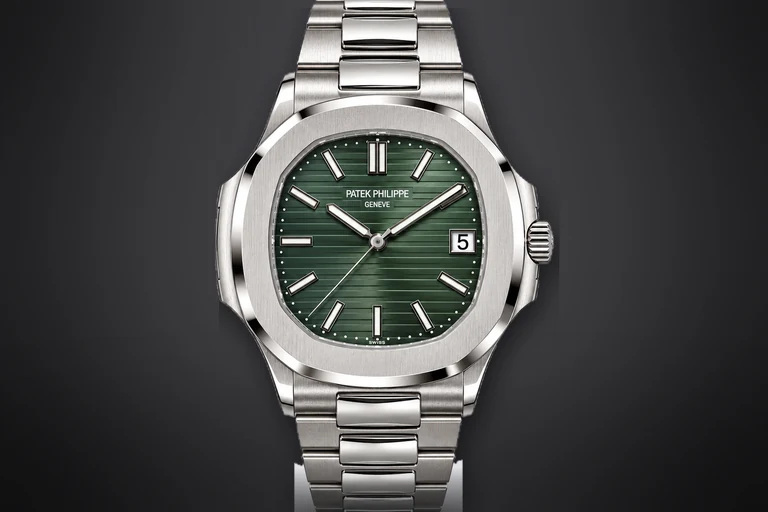
For a current-production steel Rolex, provenance may influence confidence and liquidity. For a discontinued Patek Philippe, early Audemars Piguet, vintage Rolex or Richard Mille with a limited production story, it can materially affect price. The more collectible the reference, the less sensible it is to rely on a reassuring seller description alone.
What provenance actually proves
Provenance is the documented chain of a watch's life: where it was sold, who has owned it, how it has been serviced, altered or restored, and whether its key components have remained together. It is not the same as authenticity, although the two subjects overlap.
An authentic watch may have a replacement dial, a later bracelet, an erased serial number or an unexplained gap in ownership. None of those points automatically makes it a bad purchase. They do affect the correct valuation, the strength of the story and the level of future buyer confidence.
The standard should reflect the watch. A modern watch bought from an established dealer may require a clean serial check, original paperwork, condition review and a proper invoice. A six-figure vintage piece warrants deeper research, specialist inspection and careful scrutiny of every document offered.
How to verify watch provenance before committing funds
Start with the watch itself, not the paperwork. Documents can be incomplete, misplaced or, in some cases, fabricated. The case, movement, dial, bracelet and serial configuration provide the first evidence.
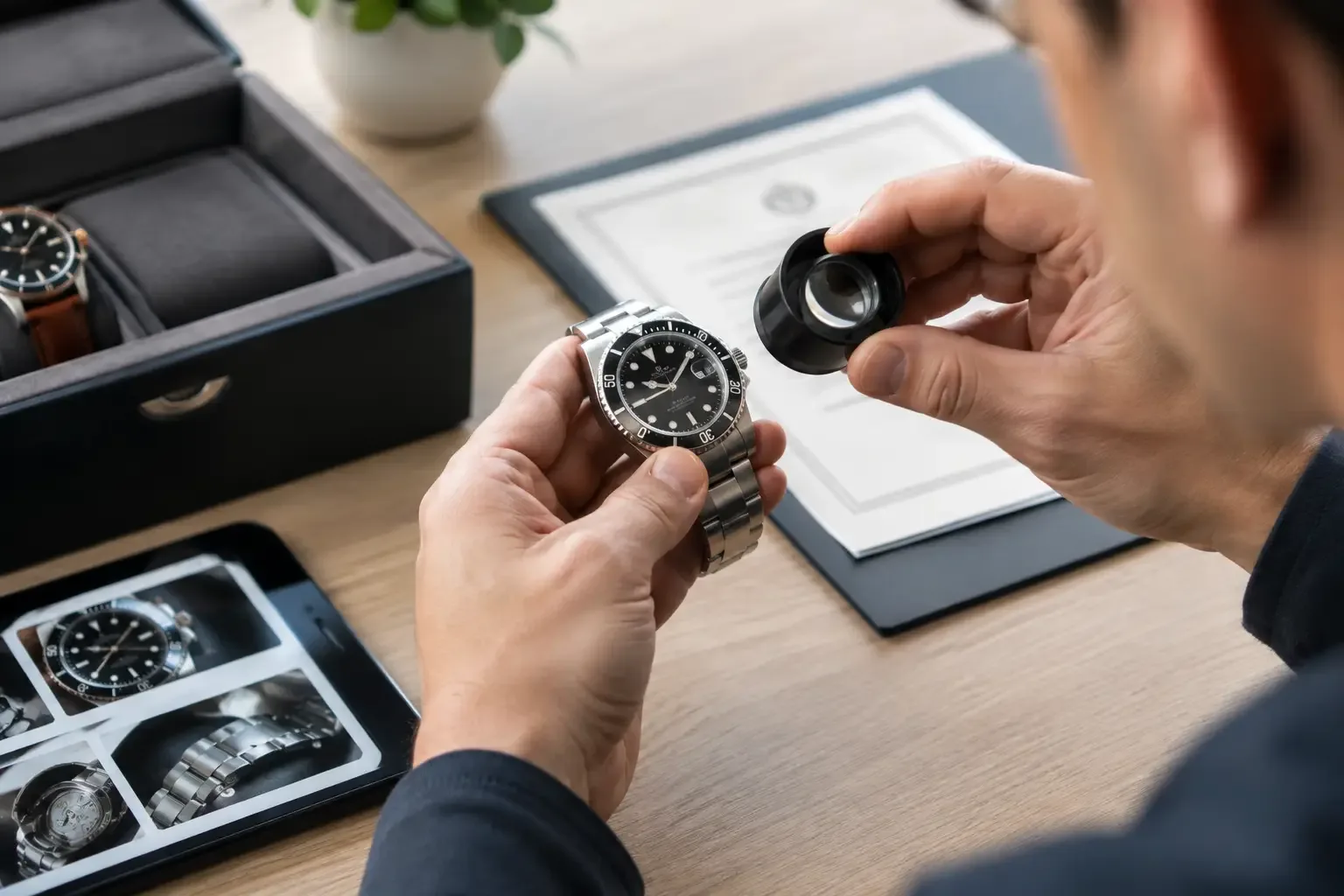
Ask for high-resolution, current photographs of the reference number, serial number, movement, inner caseback where relevant, clasp codes and any hallmarks. Request images taken specifically for you rather than relying on catalogue photography. On a valuable transaction, a live video inspection is sensible, particularly if the watch is overseas.
Serial and reference numbers should align with the claimed period and model. Their position, depth, font and condition matter. A heavily polished case may soften surrounding surfaces, but it should not provide a convenient explanation for numbers that appear irregular, partially removed or inconsistent with the watch's stated identity.
Then compare the visible specification against reliable reference knowledge. Correct hands, dial printing, bezel, crown, pushers, bracelet and movement details change over time, sometimes within a single reference. This is where broad market knowledge is not enough. Small component differences can be original period variation, later service replacement or an outright mismatch. The answer depends on the reference and its production year.
A specialist watchmaker or recognised independent expert should inspect a serious purchase before it is finalised. Their role is not simply to say that the movement runs. They should assess whether the movement, dial, case and bracelet are appropriate to one another, identify refinishing or replacement parts, and flag signs of water damage, corrosion, unauthorised work or serial interference.
Build the paper trail, but test it
Original box and papers are valuable, but they are supporting evidence rather than a guarantee. A complete set should be internally coherent: the warranty certificate or papers should state the correct reference and serial number; the retailer details should make sense for the market and date; and the typography, stamps and writing should be consistent with known examples.
Service records are often more revealing than buyers expect. An invoice from an authorised service centre can confirm that the brand handled the watch at a given date, but read it closely. It may reveal replaced hands, dial, bezel, crystal or bracelet parts. Those changes can be entirely practical, yet originality-sensitive collectors need to know exactly what remains from the original sale.
For a watch with notable ownership, seek direct evidence rather than a story passed through several dealers. This could include a named invoice, correspondence, period photographs or a letter that establishes the connection. A celebrity association without credible documentation is marketing, not provenance.
Where the seller says the watch is from an estate, family collection or private client, ask what they can substantiate without compromising privacy. Discretion is normal at this level. It is still reasonable to establish how the seller acquired the watch, how long they have held it and whether they have authority to sell it.
The most useful document pack will usually include:
- the original warranty card, certificate or extract where available;
- service invoices and condition reports;
- the original purchase invoice or a traceable dealer invoice;
- photographs of serial and reference numbers;
- written confirmation of the seller's title and return terms.
A missing paper is not necessarily a reason to walk away. Many older watches lost their documents decades ago. What matters is that the price, seller assurances and risk profile reflect that absence.
Check title, theft risk and seller credibility
A seller must have good title to transfer good title. Ask directly whether the watch is free of finance, security interests, insurance claims and third-party ownership disputes. Obtain that statement in writing on the invoice, alongside the full reference, serial number, condition description and agreed accessories.
Have the serial number checked against reputable stolen-watch and loss registers. A clear result is useful, but it is not absolute proof of legitimacy. Not every loss is reported, records can be delayed, and a watch may have been altered to obscure its identity. Treat the search as one layer in a wider process.
Seller diligence is equally important. Establish who is actually selling the watch: a known dealer trading under a registered business, a collector selling from a documented collection, or an intermediary acting for someone else. If there is an intermediary, ask who will issue the invoice, hold the funds and stand behind the transaction if a problem emerges.
Look for consistency between the seller's reputation, their inventory, their knowledge and their willingness to answer precise questions. A credible seller will not object to reasonable verification. They may protect a principal's identity, but they should be able to provide a clear commercial path, a proper inspection window and an accountable invoice.
Match the payment structure to the risk
The method of payment should preserve leverage until inspection and documentation are complete. For an in-person acquisition, the cleanest route is often inspection, verification and settlement in a controlled setting. For remote transactions, agree the inspection conditions before money moves, including who bears return shipping, what constitutes a material discrepancy and how quickly a dispute must be raised.
Crypto settlement can be efficient for international purchases, but it is irreversible by design. That makes counterparty diligence and a documented escrow or staged-release arrangement particularly valuable. Confirm the receiving entity, wallet-verification procedure, exchange-rate basis and invoice details before transferring funds. Convenience should not remove controls.
For high-value or complex sourcing, The 0.1% Group can coordinate the watch, specialist review, secure logistics and payment process through one accountable contact. The aim is not to create more ceremony. It is to ensure that the person sourcing the piece can answer for the details that matter.
Know when provenance changes the price
Provenance has different value depending on the category of watch. On a modern Rolex Daytona, a full set and clean ownership history tend to improve marketability, but condition and reference desirability may still lead the valuation. On a vintage Patek Philippe or a rare Rolex with a scarce dial configuration, originality and a documented chain of custody can be central to the entire price.
Do not pay a full-provenance premium for a partial story. Equally, do not dismiss a compelling watch solely because its original papers no longer exist. Price it for what can be demonstrated, obtain the right expertise and retain every record generated during your ownership.
Your own paperwork becomes part of the next buyer's decision. Keep the purchase invoice, inspection report, service receipts, photographs and correspondence together from day one. A carefully documented acquisition is easier to insure, easier to sell and far easier to trust when the watch eventually changes hands.